Anselm Kiefer’s exhibition at the White Cube Gallery in London (June-August 2023) is an engaging multimedia homage to James Joyce’s Finnegans Wake (1939). (Kiefer is a painter and sculptor, born in Germany in 1945.) The exhibition is arranged across four rooms linked via a large central passage, so five gallery spaces in all. Each invokes a different aspect of Joyce’s Wake, combining key motifs, suggestive interpretations, and multiple cross-references.
The entrance
You enter the main passage through a gap in the hanging, film-like strips of a curtain, which recalls the ‘photoist’s’ chemically deformed horse photograph, a ‘grotesquely distorted macromass of all sorts of horsehappy values and masses of meltwhile horse’, itself an emblem of the Wake’s guiding preoccupation with the many technologies and modalities of representation (FW, 111). The most pronounced of these in the exhibition is Joyce’s own medium, writing itself, which features throughout, whether as graffiti on the walls, as captions for the displays, as inscriptions in the paintings, or as marks on assorted detritus. These are all rendered in script rather than print form.
The dark passage and the light side room
The curtained entrance leads directly into the long, connecting passage, which is dimly lit and lined on both sides with floor-to-ceiling shelves, all displaying an array of cultural artefacts, natural specimens, and more. It is a cabinet of dark curiosities, a playful invocation of a Joycean/Wakean unconscious, and a material recreation of the ‘Willingdone Museyroom’ with which the Wake begins (8). Among the many items on display are skeletons, dried plants, a DNA helix, metal tools, rusted machinery, a hanging wardrobe, pornographic images, political symbols (notably the hammer and sickle), a model of a cathedral, a rusted bicycle, printers’ trays, books, etc. The temptation to see this as a version of the unconscious is reinforced by the smallest side room, the second of three leading off to the left of the passage. Like the passage, this is set out as a multi-shelved Museyroom, sometimes repeating items in its darker twin, though now brightly lit and often white — in effect, the space of the conscious self. These connections with difference creatively complicate the standard reading of the Wake as Joyce’s book of the night, in contrast to Ulysses (1922), his book of a day. They also productively undercut the inevitable spatializing effects of the exhibition itself, revealing that in Kiefer’s Wake, as in Joyce’s, no binaries are safe.
The heap and heliot room
The first of the rooms leading off to the left is dominated by a heap of sand in which discarded shopping trolleys, inscriptions, rusty sunflowers, and a wheelchair are variously buried. This recalls the ‘fatal midden’ in which ‘the original hen’ finds the manuscript of ALP’s unreadable letter (110). One of the walls includes a group of graffitied citations addressing political and economic issues: ‘making a venture out of the murder of investment’ (341), ‘marx my word fort’ (83), ‘our bourse and politicoecomedy are in safe with good Jock [Jet] Shepherd’ (540). The only painting, which covers one of the larger walls, depicts a dark, massed crowd looking at a bright, visionary light, invoking the flower-like ancient Irish ‘heliots’ who, following St Patrick, turn to worship ‘the firethere the sun in his halo cast’ (612-13).
The HCE room
The third and final room leading off to the left of the dark passage is dedicated to HCE, the Wake’s ‘male’ (tumescent-detumescent) principle, who is associated with master-builders of various kinds, the rise and fall of leaders, states, empires, etc. Like the first room, it is dominated by a central heap, though this is now a rubble of concrete slabs (the Berlin Wall?), barbed wire, and some sunflower-like forms. The room has three large, dark paintings: a portrait of HCE’s family (ALP, Shaun, Shem, and Issy), a tribute to oil painting (‘and oil paint use a pumme if yell trace,’ 230), and a war-ravaged field of flowers, recalling the quotation from Edgar Quinet’sIntroduction à la Philosophie de l’Histoire de l’Humanité (1825) that Joyce reworked throughout the Wake. The quotation, which Joyce cites in full only once and in French, translates as follows:
Today, as in the time of Pliny and Columella, the hyacinth disports in Gaul, the periwinkle in Illyria, the daisy on the ruins of Numantia; and while around them the cities have changed masters and names, while some have ceased to exist, while the civilisations have collided with one another and smashed, their peaceful generations have passed through the ages and have come up to us, fresh and laughing as on the days of battles. (281)
The ALP room
The only room leading off to the right of the dark passage is a counter space dedicated to ALP, the Wake’s ‘female’ (Anna Livia Plurabelle) principle, who is associated with the river Liffey, all forms and varieties of fluid connection, and the Wake itself as a never-ending, free-flowing stream of letters. Uniquely, all four walls have paintings, a series of eleven, all featuring the same striking mix of browns, greens, copper blue, and luminous gold. The link to writing and the Wake is established via the scattered piles of water-weathered, lead-paged books in the middle, a material contrast to the concrete rubble of the HCE room. A rusty scythe amid the books hints at the ALP death monologue with which the Wake ends without ending.
According to Wikipedia’s colour coding of the map above, India and South Africa are not part of the Anglosphere—the light green territories, including the United Kingdom, Australia, and the United States, where, despite being the majority language, English has no official status. India and South Africa are orange because they both recognize the language in law—English is one among 22 official languages in the former, one of 11 in the latter—and because it is widely used in education and public life.
Inevitably, this is a schematic and legalistic way of representing the many stories of English across the world today. To uncover the tangled histories of the language and its complex contemporary realities, we need a more grounded and localized perspective. Here I take a view from Makhanda, Eastern Cape, South Africa, site of the ‘1820 Settlers’ Monument’ (as it is still called), and from Banka, Uttar Pradesh, India, home to the Dalit ‘English Temple.’
The Settlers’ Monument
The 1820 Settlers’ Monument occupies a commanding position on a hill overlooking the city of Makhanda (population around 140,000). It is, in fact, adjacent to Fort Selwyn, a stone redoubt the British had located on the same spot for military purposes in the 1830s — hence Gunfire Hill. Modelled on the monolithic modernist design the American architect Louis Kahn developed in the 1950s, the vast 20,000-square metre, seven-level building includes a 1000-seat theatre, a 200-seat cinema as well as art galleries and conference facilities. Since it was opened in 1974, it has also been the venue for an annual festival of the arts. As its first publicity officer explained, the ship-like concrete, brick and glass structure—‘proudly dominating the landscape’—was intended to embody the iconic function:
As the use of the building had to be related to the contributions made by the British pioneers, the main functions are designed to concentrate on perpetuating the heritage bequeathed by the 1820 Settlers—the English language and the democratic traditions they brought with them—by means of an auditorium to be used mainly for English-language festivals and a conference centre that points to the democratic practice of debate and discussion. (Neville 1974: 12)
A plaque in the entrance, which pointedly speaks for the settler lineage in the possessive first-person plural, still makes the same point: the ‘facilities are open to all, to enjoy and enlarge our heritage of language and culture and to perpetuate our traditions of tolerance and freedom of speech.’ ‘It is perpetuating more than a language,’ the publicity officer concluded, ‘it is an ethos; a characteristic spirit; a heritage; an endowment’ (13).
Three conspicuously displayed quotations in the cavernous main foyer, one etched in stone around a central fountain, the other two rendered in large, brushed-steel letters on the concrete walls at the entrance, reiterate the message in more poetic terms. ‘That all might have life and have it more abundantly’, the fountain inscription reads, adapting Jesus’s parable of the good shepherd from the King James version of John 10:10. ‘We must take root and grow or die where we stand’, the writing on the first wall at the entrance declares, turning a past-tense observation the English missionary Henry Dugmore (1810-96) made in The Reminiscences of an Albany Settler (1871) into a present-tense injunction. Finally, a side wall at the entrance carries four lines from the end of ‘The Emigrant’s Cabin’, a 305-line ‘conversation poem’ by the Scottish writer, free-speech campaigner, and abolitionist, Thomas Pringle (1789-1834), who was a leading figure in the settler community during his brief six-year residence in the Cape:
Nor wild Romance nor Pride allured me here: Duty and Destiny with equal voice Constrained my steps: I had no other choice… Something for Africa to do or say.
This comprises lines 137-39 of the poem, plus line 230, all spoken in the Pringle voice. ‘Thomas Pringle’ lives on as the name of one of the building’s primary venues as well. The cinema and main theatre are also named: the former after the writer, feminist, and anti-war campaigner Olive Schreiner (1855-1920); the latter after the poet, academic, and leading proponent of the Monument Guy Butler (1918-2001). There is some acknowledgement of local Xhosa heritage too, but only via a single figure who also exemplifies the success of missionary evangelism. The art gallery is named after Ntsikana (1780-1821), the first Xhosa prophet to propagate Christian beliefs.
For the Monument’s founders, the talismanic settler names and quotations did more than express what they considered the ‘characteristic spirit’ of the British legacy. Like the plaque declaring the facilities ‘open to all,’ they elevated their project above the brutally repressive realities of apartheid. ‘Inscribed in the flagstones of the floor of the impressive memorial foyer, around a perpetually bubbling fountain, are the words from St John’s gospel’ testifying to the Monument’s ‘openness and hospitality,’ the chair of the 1820 Foundation explained in 1991 (Neville 1991: 105). He was echoing his predecessors who had from the start insisted ‘this is no sectional or bombastic memorial’ (103).
Some details about the building’s history suggest otherwise. Two will suffice. First, a coincidence: the monumental tribute to ‘our traditions of freedom of speech’ opened the year the white-only, Westminster-style Parliament, another settler inheritance, passed the Publications Act, 1974, inaugurating a new, more repressive phase in the history of apartheid censorship. Second, an enabling condition: far from disdaining, or simply ignoring, the drive to commemorate the 1820 settlers, the state actively supported it from the start, in the end covering 80% of the final construction cost (R3.2 million of the R4 million total, around R200 million in today’s values) (Neville 1991: 64, 93). Indeed, for the state, the Monument was something of a propaganda coup—the publicity officer’s promotional piece about the opening was, accordingly, given a six-page, illustrated spread in S.A. Panorama (1956-1993), a state-run periodical designed to boost South Africa’s image at home and abroad (see images below). Evidently, any threat the founders’ claims about openness, tolerance, and free expression posed was outweighed by the endorsement their project gave to the state’s own racialized ethnolinguistic vision of apartheid South Africa as an essentially Anglo-Afrikaner polity, comprising an association of divinely ordained, separate volke, each with its own language and ethnic heritage.
With apologies to Still Life
The name and future of the Settlers’ Monument have been under review since 2015, outcome not yet known. In the meantime, the South African-born writer Zoë Wicomb has given Thomas Pringle and his legacy a trenchant fictional reassessment in Still Life (2020), pre-emptively re-setting the terms of the debate in ingeniously inventive ways (see ‘Other Writers’).
The Dalit Temple
Inaugurated in 2010, the Dalit Temple in the rural village of Banka (population around 8,000) was imagined as an altogether more modest structure. Planned to be located in the grounds of a private, Dalit-run school, it was envisaged as a single-story block covered in black granite, to be built for the sole purpose of housing a small bronze idol of ‘Angrezi Devi’ (literally, ‘English Goddess’), as her Hindi name has it. She is also known as the ‘Dalit Goddess’ or ‘Dalit Ma’ (‘Dalit Mother’). The fact that it was to be on private land is significant. Despite this, state officials still opposed its construction — one of many features distinguishing it from the Monument — so it remains a Temple of the imagination, though a replica was erected temporarily in Goa in 2021. Equally significant is the date on which the idea of the Goddess was first mooted: 25 October 2006. This marked the 206th birthday of Thomas Babington Macaulay (1800-59), the colonial administrator who did most to entrench English as the primary language of elite education in British India, a process that began with his notorious ‘minute’ of 1835 — as it happens the year plans for the construction of Fort Selwyn were approved. Macaulay is not the only historical figure commemorated, however. As the leading proponent of the project, the journalist and activist Chandra Bhan Prasad, commented, the Temple is also dedicated, less provocatively, to the memory of Dr Bhimrao Ramji Ambedkar (1891-1956), the reforming Dalit jurist, economist, and political leader who played a key part in framing the Indian Constitution. ‘When it was being debated as to what should be the national language of India after independence,’ Prasad remarked, ‘Dr Ambedkar was the only national leader who vociferously batted for English’ (for more on these debates and the poet Arvind Mehrotra’s own inventive response to them, see Chapter 7 of Artefacts of Writing).
Modelled on the Statue of Liberty, the small bronze figure, designed by the Dalit writer and artist Shanti Swaroop Baudh, captures the myriad aspirations the Goddess embodies. As Prasad explained:
She holds a pen in her right hand which shows she is literate. She is dressed well and sports a huge hat—it’s a symbol of defiance that she is rejecting the old traditional dress code. In her left hand, she holds a book which is the constitution of India which gave Dalits equal rights. She stands on top of a computer which means we will use English to rise up the ladder and become free for ever.
This makes the Goddess the herald of a future in which the Dalit community will not just have been empowered through their proficiency in written English. They will have escaped ‘the caste-saturated languages of India which they habitually speak,’ as Sumathi Ramaswamy notes (314). The Goddess is not wholly anglicized, however: the computer-plinth on which she stands has on its screen the symbol of the Buddhist Dharma chakra, no doubt signifying the righteousness of her path, while also ensuring her call to English does not entail any form of Christianization—recall the quotation from the King James Bible in the Settlers’ Monument and the tribute to Ntsikana.
Quotations from the poster below
The quotations displayed on the wall behind the Goddess, in a replica displayed in Goa, also set the Temple apart from the Monument not least by eschewing the Christian ethnonationalist assumptions on which the latter was founded. Mixed in with an array of classic formulas from mathematics and physics—E=mc2, V-E+F=2, etc.—is a series of literary citations mainly from canonical English authors (Shakespeare, Wordsworth, Dickens, George Eliot, Emily Bronte, Orwell), but also from Yeats (Ireland), T.S. Eliot (US/UK), Harper Lee (US), and Atwood (Canada), and then, in translation, Homer, Sophocles, Márquez, Camus, and Dostoevsky (see full details below). So, in contrast to the Monument’s ethnic canon, the Goddess represents a multilingual tradition of world literature in English, which, as the quotations intimate, speaks to a constellation of fundamental rights and aspirations. Some point to the freedom the Goddess heralds (Sophocles: ‘free speech at least is mine’), some to the scientific attitude (Dickens: ‘Take nothing on its looks’), and others to the need to for an enlarged mentality (Lee: ‘You never really understand a person until you consider things from his point of view’) or to the dignity of self-sufficiency (Wordsworth: ‘bliss of solitude’). ‘This is the cry of emancipation,’ the manifesto on the first promotional poster declared, ‘this is the cry for English, the Dalit Goddess.’ The poster then encouraged Dalit parents to ‘lean poetically’ to their newborns: ‘First the left ear/Whisper now/‘A-B-C-D’/Turn to the right/Whisper/‘1-2-3-4.’
Temple Wall Quotations
Let me not then die ingloriously and without a struggle, but let me first do some great thing that shall be told among men hereafter. (Homer, Iliad, c. 800BCE)
But if thought corrupts language, language can also corrupt thought. (George Orwell, ‘Politics and the English Language’, 1946)
Perhaps one did not want to be loved so much as to be understood.
‘Who controls the past,’ ran the Party slogan, ‘controls the future: who controls the present controls the past.’
Until they become conscious they will never rebel, and until after they have rebelled they cannot become conscious. (George Orwell, Nineteen-Eighty Four, 1949)
What do we live for, if it is not to make life less difficult to each other? It is always fatal to have music or poetry interrupted. (George Eliot, Middlemarch, 1871)
Take nothing on its looks; take everything on evidence. There is no better rule. (Charles Dickens, Great Expectations, 1861)
For oft, when on my couch I lie In vacant or in pensive mood, They flash upon that inward eye Which is the bliss of solitude; And then my heart with pleasure fills, And dances with the daffodils. (William Wordsworth, ‘I wondered lonely as a cloud’, from Poems, 1807)
You never really understand a person until you consider things from his point of view – until you climb inside his skin and walk around in it.
The one thing that doesn’t abide by majority rule is a person’s conscience. (Harper Lee, To Kill a Mockingbird, 1960)
Off my face! You’re the life principle, more or less, so get going on a little optimism around here. Get rid of death. Celebrate increase. Make it be spring. (Margaret Atwood, ‘February’ from Morning in the Burned House, 1995)
It is enough for me to know that you and I exist in this moment. (Gabriel García Márquez, One Hundred Years of Solitude, 1967)
If something is going to happen to me, I want to be there. (Albert Camus, The Stranger, 1942)
There is nothing [either] good or bad, but thinking makes it so. I could be bounded in a nutshell, and count myself a king of infinite space. (Shakespeare, Hamlet, c. 1600)
Had I the heavens’ embroidered cloths, Enwrought with golden and silver light, The blue and the dim and the dark cloths Of night and light and the half-light, I would spread the cloths under your feet: But I, being poor, have only my dreams; I have spread my dreams under your feet; Tread softly because you tread on my dreams. (W. B. Yeats, ‘He Wishes for the Cloths of Heaven’, from The Wind Among the Reeds, 1899)
I have to remind myself to breathe—almost to remind my heart to beat! I’m now quite cured of seeking pleasure in society, be it country or town. A sensible man ought to find sufficient company in himself. (Emily Bronte, Wuthering Heights, 1847)
King as thou art, free speech at least is mine. To make reply; in this I am thy peer. (Sophocles, Oedipus Rex, c. 429 BCE)
We shall not cease from exploration And the end of all our exploring Will be to arrive where we started And know the place for the first time. (T.S. Eliot, from “Little Gidding,” Four Quartets, 1943)
It takes something more than intelligence to act intelligently.
I know that you don’t believe it, but indeed, life will bring you through. You will live it down in time. What you need now is fresh air, fresh air, fresh air!
It would be interesting to know what it is men are most afraid of. (Fyodor Dostoyevsky, Crime and Punishment, 1866)
1. Unlike most modern states, including the Republic of Ireland, the precariously United Kingdom of Great Britain and Northern Ireland has no written constitution. Yet, as the coronation of King Charles III reaffirmed on 6 May 2023, it does have a foundational book (or Book). Following a custom dating from 1689, the first of many gifts presented to the King was a new printing of the King James Bible (1611). Produced by Oxford University Press, on commission for the Archbishop of Canterbury, it was handbound in red leather and decorated in gold leaf by London bookbinders Shepherds, Sangorski & Sutcliffe.
2. Presenting it to the King, the Moderator of the General Assembly of the Church of Scotland, Rev Dr Iain Greenshields, declared:
Sir: to keep you ever mindful of the law and the Gospel of God as the Rule for the whole life and government of Christian Princes, receive this Book, the most valuable thing that this world affords. Here is Wisdom; This is the royal Law; These are the lively Oracles of God.
The final four clauses repeat the words used at the same point in the coronation of Elizabeth II in 1953. The last statement is a pastiche of Acts 7:38 (‘lively oracles’) and various references to the ‘Oracles of God’ (Romans 3:2, Hebrews 5:12, and 1 Peter 4:11).
3. Following the book presentation, Justin Welby, the Archbishop of Canterbury, administered the Coronation Oath, which also dates from the late-17th century — it was established under the Coronation Oath Act 1688. Among other things, the King assented to the following:
Will you to the utmost of your power maintain the Laws of God and the true profession of the Gospel? Will you to the utmost of your power maintain in the United Kingdom the Protestant Reformed Religion established by law? Will you maintain and preserve inviolably the settlement of the Church of England, and the doctrine, worship, discipline, and government thereof, as by law established in England? And will you preserve unto the Bishops and Clergy of England, and to the Churches there committed to their charge, all such rights and privileges as by law do or shall appertain to them or any of them?
4. These words sit uneasily with the accommodating language Welby used to introduce the oath. After affirming the King’s duty to uphold the established (i.e. state) Church of England and the ‘true profession of the Gospel’, he added, ‘and, in so doing, to foster an environment in which people of all faiths and beliefs may live freely.’ This nod to modernity echoed Charles’s own long-standing commitment to recognizing the religious diversity of the UK and drew attention to the presence of non-Christian faith leaders in the ceremony. These included representatives of Jewish, Sunni and Shia Muslim, Sikh, Buddhist, Hindu, Jain, Bahá’í, and Zoroastrian traditions (see image above).
5. If this awkward gesture of inclusiveness from within the 17th-century language of Anglican supremacy speaks to the character of statist multiculturalism in the UK, the conspicuous non-recognition of those with no faith points to the disjunction between the deep history of the coronation ceremony and the realities of contemporary Britain. In 2021, for the first time in the census of England and Wales, less than half the population (46.2%, 27.5 million people) identified as Christian, down just over 13% since 2011; ‘no religion’ was the second most popular response (37.2%, or 22.2 million people). Moreover, according to the latest World Values Survey, 48% of the UK population do not believe in God, putting the country sixth in the world on this measure. Taken in order, only China, Sweden, Japan, South Korea, and Norway rank higher when it comes to non-believers.
6. Adding a copy of James Joyce’s Finnegans Wake (1939) to the array of coronation gifts would be a good first step towards acknowledging these realities. The reason? Reflecting the unlimited scale of Joyce’s ambition, the Wake is not just his never-finished, ever-changing secular book of Liffley ‘moracles’ (617). It is an iconic anti-Book: Joyce’s answer to all those who, like the Wake’s Shaun-figure, insist on the supremacy and finality of any one orthodox philopoliticoreligious artefact of writing. Here is Shaun asserting his own mono-megalomaniacal Bookishness, while denouncing his feckless, subversive twin brother Shem, ‘the Penman’ (125):
my trifolium librotto, the authordux Book of Lief, would, if given to daylight, (I hold a most incredible faith about it) far exceed what that bogus bolshy of a shame, my soamheis brother, Gaoy Fecks, is conversant with in audible black and prink. (425)
Though the Wake challenges the Catholic foundations of the Irish republic, as inscribed in the preamble to its constitution (‘the prestatute in our charter’, 117), Shaun’s invocation of Guy Fawkes, the Catholic leader of the 1605 Gunpowder plot, indicates that Joyce’s anarchically anti-statist secular proclivities were ecumenical. In fact, no fetishized ‘idol worts’ (378) are safe in his anti-Book of ‘ourth’ (18, and see ‘Fourth Proposition‘).
In his classic paper ‘Computing Machinery and Intelligence‘ (1950), Alan Turing sketched some examples of what came to be known as the ‘Turing test’ — he called it the ‘imitation game’ (433). The aim was to test a computer’s ability to pass as human in an exchange with a human interlocutor — given the complexities of the spoken word, which combines individual sounds (phonemes) and intonation (prosody), all of which continue to pose real challenges for computers, it is worth noting that Turing imagines these as written exchanges. ChatGPT is just the kind of machine he envisaged. So how does it fare with his own scenarios?
1. Turing detailed only two exchanges, one at the very beginning, which sets the scene in general terms, and another in a later section where he addresses various objections to the idea that machines might ever be able to ‘think’. Here is the first, as Turing set it out:
Q (human): Please write me a sonnet on the subject of the Forth Bridge.
A (possible machine): Count me out on this one. I never could write poetry.
Q: Add 34957 to 70764.
A: (Pause about 30 seconds and then give the answer) 105621.
Q: Do you play chess?
A: Yes.
Q: I have K at my K1, and no other pieces. You have only K at K6 and R at R1. It is your move. What do you play?
A: (After a pause of 15 seconds) R-R8 mate.
Here is the exchange re-played with ChatGPT (as of April 2023; see GPT-4 and 4o’s sonnets at the end of this post). Evaluate each response for yourself, bearing in mind that no human could produce a sonnet in under 5 seconds:
Q: Please write me a sonnet on the subject of the Forth Bridge.
ChatGPT: Of course! Here is a sonnet on the subject of the Forth Bridge:
Behold the mighty Forth Bridge’s grand span, Its iron limbs outstretched o’er firth and sky, A testament to man’s audacious plan, To conquer nature, reach beyond, and fly.
Its girders soar like wings above the waves, Their strength and grace a symphony in steel, A tribute to the engineers who gave Their sweat and toil to make the dream real.
For generations it has stood the test, A steadfast guardian of the northern shore, A symbol of endurance, power, and zest, A source of pride that time cannot ignore.
So let us raise a toast to this great feat, This wonder that has made our hearts complete.
Q: Add 34957 to 70764
ChatGPT (a second later): The sum of 34957 and 70764 is 105721.
Q: Do you play chess?
ChatGPT: As an AI language model, I don’t have the ability to physically play games such as chess. However, I can provide information about chess, including rules, strategies, and history. I can also help you with any questions or doubts you may have about the game.
Q: I have K at my K1, and no other pieces. You have only K at K6 and R at R1. It is your move. What do you play?
ChatGPT (a second later): In this situation, it is possible for me to checkmate your king in one move. I can move my rook from R1 to K1, delivering a checkmate by trapping your king in the corner of the board. This is a classic checkmate position known as “Fool’s Mate” and can occur if the player controlling the black pieces is not careful in the opening moves of the game.
2. In the second exchange, Turing addresses what he called ‘an argument from consciousness’ of the kind exemplified by the leading British neurologist, Geoffrey Jefferson, in ‘The Mind of Mechanical Man‘ (1949). ‘Not until a machine can write a sonnet or compose a concerto because of thoughts and emotions felt,’ Jefferson argued, ‘and not by the chance fall of symbols, could we agree that machine equals brain — that is, not only write it but know that it had written it. No mechanism could feel (and not merely artificially signal, an easy contrivance) pleasure at its successes, grief when its valves fuse, be warmed by flattery, be made miserable by mistakes, be charmed by sex, be angry or depressed when it cannot get what it wants’ (1110).
Turing did not accept this argument, which, he thought, entailed a form of solipsism. ‘The only way by which one could be sure that a machine thinks is to be the machine and to feel oneself thinking’ — the implication of Jefferson’s test. ‘Likewise’, Turing continued, ‘the only way to know that a man thinks is to be that particular man’, that is, ‘the solipsist point of view’ (446). This ‘may be the most logical view’, he added wryly, ‘but it makes communication of ideas difficult’ — to avoid this ‘it is usual to have the polite convention that everyone thinks.’
He then sketched the following version of his ‘imitation game’ based on an academic viva voce, wondering what Professor Jefferson would say if his ‘sonnet-writing machine’ produced answers like these:
Q: In the first line of your sonnet which reads “Shall I compare thee to a summer’s day,” would not “a spring day” do as well or better?
A: It wouldn’t scan.
Q: How about “a winter’s day”? That would scan all right.
A: Yes, but nobody wants to be compared to a winter’s day.
Q: Would you say Mr. Pickwick reminded you of Christmas?
A: In a way.
Q: Yet Christmas is a winter’s day, and I do not think Mr. Pickwick would mind the comparison.
A: I don’t think you’re serious. By a winter’s day one means a typical winter’s day, rather than a special one like Christmas.
Here is ChatGPT’s loquacious take on the viva:
Q: In the first line of your sonnet which reads ‘Shall I compare thee to a summer’s day’, would not ‘a spring day’ do as well or better?
ChatGPT: The line “Shall I compare thee to a summer’s day” is actually from one of William Shakespeare’s most famous sonnets, Sonnet 18. While the specific choice of “summer’s day” may seem arbitrary, it is significant because it sets up a comparison between the speaker’s beloved and something that is widely considered to be beautiful and desirable – a warm, sunny day in the height of summer.
It is possible that “a spring day” could work as a substitute, but it would change the tone and meaning of the poem. Spring is typically associated with new beginnings and growth, while summer is associated with fullness, warmth, and maturity. The comparison to a summer’s day suggests that the speaker’s beloved is at the height of their beauty and vitality, much like a perfect summer’s day.
That being said, it is worth noting that poetry is highly subjective and open to interpretation. Different readers may have different ideas about what words and images work best in a poem, and there is no one “right” answer.
Q: How about ‘a winter’s day’?
ChatGPT: Choosing “a winter’s day” instead of “a summer’s day” would certainly change the meaning and tone of the poem. Winter days are generally associated with coldness, bleakness, and death, while summer days are associated with warmth, beauty, and life.
If the speaker were to compare their beloved to a winter’s day, it could suggest that their beloved is beautiful even in the midst of difficulty and hardship. However, this comparison would not fit with the overall tone and theme of Sonnet 18, which celebrates the timeless beauty of the beloved and the power of poetry to preserve that beauty.
Therefore, while “a winter’s day” could be an interesting alternative to “a summer’s day” in a different poem, it would not be a suitable substitution for Sonnet 18.
Q: Would you say Mr. Pickwick reminded you of Christmas?
ChatGPT: As an AI language model, I cannot have personal experiences or emotions, but I can provide you with information about Mr. Pickwick and Christmas.
Mr. Pickwick is a fictional character from Charles Dickens’ novel “The Pickwick Papers,” and he is known for his jovial personality, generosity, and love of good food and drink. He is often seen as a kind and generous character who embodies the spirit of Christmas. In that sense, some readers or viewers may associate Mr. Pickwick with Christmas due to his festive nature.
However, it is worth noting that this is a subjective interpretation of the character, and not everyone may share the same association. Additionally, while Dickens’ works are often associated with Christmas, “The Pickwick Papers” is not specifically a Christmas story, so any connection between Mr. Pickwick and the holiday may be more tenuous than in some of Dickens’ other works.
Q: Yet Christmas is a winter’s day, and I do not think Mr Pickwick would mind the comparison.
ChatGPT: Indeed, Christmas is typically associated with the winter season, and many people associate the holiday with themes of warmth, generosity, and cheerfulness. Mr. Pickwick’s personality and behavior could certainly be seen as embodying these themes, and so it is possible that some readers or viewers might make a connection between the character and the holiday.
Of course, the extent to which any individual might see Mr. Pickwick as resembling Christmas would depend on their own personal interpretation and cultural context. But overall, it is certainly conceivable that some people might make such an association.
An obvious question: what does ChatGPT ‘think’ of Jefferson’s claim about brains vs. machines? Here’s an answer:
ChatGPT: Geoffrey Jefferson’s statement can be interpreted in different ways, but it raises some interesting points about the relationship between machines and human intelligence.
In terms of the ability to create artistic works, machines have come a long way since 1949. Today, there are AI programs that can compose music, generate poetry, and even create paintings. However, whether or not these works of art can be said to have been created “because of thoughts and emotions felt” is a matter of debate.
On one hand, some argue that AI systems lack the subjective experiences and consciousness that humans possess, and therefore cannot truly create art in the same way that humans do. Others argue that the output of AI systems can be considered art if it is aesthetically pleasing and evokes an emotional response in the viewer/listener/reader.
In terms of whether a machine can equal a brain, it is important to define what is meant by “equal”. If we are talking about raw processing power and speed, then machines have already surpassed the human brain in many respects. However, if we are talking about the complexity of human thought and emotions, then it is still an open question whether machines will ever be able to fully replicate that.
Overall, Jefferson’s statement raises important questions about the relationship between machines and human intelligence, and while the answer to his specific question may be debatable, it is clear that machines are becoming increasingly sophisticated and capable of performing tasks that were once thought to be the exclusive domain of humans.
GPT-4’s sonnet on the Forth Bridge:
Upon the estuary of the Forth she stands, An iron maiden, sturdy, tall and grand. She speaks to man’s audacious, bold demands, Where water meets the ever-seeking land.
Her cantilevers reach toward the sky, In steel and rivet, strength personified, A sight to stir the heart, catch the eye, Of awestruck observers far and wide.
Against the elements, she holds her own, Unyielding as the Scottish rocks below. A triumph of the will mankind has shown, Her silhouette in sunset’s radiant glow.
Ode to thee, O Bridge across the Forth, A testament to human ingenuity and worth.
GPT-4o’s effort (May 2024):
The Forth Bridge Beneath the skies where Scottish mists reside, A marvel stands, the Forth Bridge bold and grand. Its iron arms reach out with timeless pride, A testament to work by human hand.
Each towering arch, a symbol of the past, Connects the lands with strength that time defies. Through storms and sun, its legacy will last, A steadfast link beneath the changing skies.
The waters flow beneath its mighty span, Reflecting all the beauty it bestows. A bridge that speaks of what the heart of man Can dream, design, and through the ages, grow.
So let us gaze upon this wondrous sight, The Forth Bridge stands, a beacon in the night.
1. This illustration introduces a brief note inLudwig Wittgenstein and the Vienna Circle (1979), a series of occasional conversations with Wittgenstein recorded by the Austrian philosopher Friedrich Waismann between 1929 and 1932 (p. 50). The note comes at the end of the entries for 22 December 1929. Given the precise nature of the illustration, the date is significant. What Waismann drew, no doubt at Wittgenstein’s prompting, was an example of the new optical sound-on-film technology which combined an audio-track with the visual frames on celluloid film. The first, called Phonofilm, patented in 1919, was soon overtaken by improved systems like RCA Photophone, initially exhibited in 1927. Since the first major ‘talkie’, The Jazz Singer (1927), used a different system with the sound recorded on a separate disc, the illustration reflected a detailed knowledge, again most probably on Wittgenstein’s part, of the latest technological developments in the film industry. The following statements then appear under the illustration:
2. There are several oddities about this gnomic record (prose-poem?), beginning with the fact that the ‘I’, no doubt the au courant Wittgenstein, begins with the ‘magic lantern’, a mode of visual projection developed in the 17th century, which was, of course, silent. Most probably he wanted to bring the ‘old simile’ into the new era of sound film — as Waismann’s heading for the entry intimated, the simile concerned ‘Language and World.’ So, again reading between the lines, which is pretty much where all the reading must happen here, the primary function of language as a bearer of knowledge is, like the old magic lantern, to picture the world. This effectively adds one more analogy to the many Wittgenstein used in the Tractatus (1921) to clarify his so-called ‘picture theory’ of language: he refers to tableau vivant, gramophone records, musical scores, models, hieroglyphic and alphabetical scripts, and more (see ‘Strip Teasy’ post).
3. The new sound film technology changed the terms of the analogy not simply by adding audio but by distinguishing two sets of relationships. First, there is technical relationship between the sound-track and the film-strip (as in the illustration); second, there is the experiential relationship between the music and the film. (Note: we pass over the more obvious links between sound-track and music, film-strip and film). Then we have the analogy with language and the world. As the two final statements and the pairings to the right of the four-part grouping indicate, this applies only to the experiential music-film connection. So ‘language accompanies [begleitet] the world’ as ‘music accompanies the film’. (Note: no mention of speech, the key element of the ‘talkies’).
4. So far, perhaps so good. But what about the question marks under film-strip and sound-track in the four-part grouping? They appear to create space for additional terms on the other side of the equation. Here it seems Waismann got the order wrong: presumably sound-track should come first, mirroring music, followed by film-strip, mirroring film. Are there any contenders? Two terms that might match language and world, making the updated magic lantern analogy do even more work?
5. It is impossible to be certain. Besides the cryptic nature of the statements, we can never be sure about the accuracy of Waismann’s reporting. (In this case, the translation — I am using Schulte and McGuinness’s English version — does not create further complications.) Yet, given the tenor of the conversations on that day in December 1929, during which Wittgenstein kept emphasizing how his thinking had changed in the eight years since the publication of the Tractatus, one possible pairing could be logical notation/sound-track, fact/film-strip, or maybe just name/track, object/strip. That said, if the question marks are not placeholders but queries expressing doubts about any viable options, then the terminology is not the issue. The key thing is to understand why, in this cryptic scenario, the experiential relationship (music/film) trumps the technical (track/strip).
6. Some of Wittgenstein’s other remarks provide a few suggestive clues. Earlier on the same day—assuming the notes are recorded chronologically—he commented:
I used to believe that there was the everyday language [Umgangssprache] that we all usually spoke and a primary language that expressed what we really knew, namely phenomena. I also spoke of a first system and a second system. Now I wish to explain why I do not adhere to that conception any more.
I think that that essentially we have only one language, and that is our everyday language. We need not invent a new language or construct a new symbolism, but our everyday language already is the language, provided we rid it of the obscurities that lie hidden in it. (45)
This sounds like Wittgenstein claiming he used to believe the task of philosophy was to create an ideal or logically perfect language, but now thinks it is only about clarifying ordinary language. In fact, he never made the first claim, though many philosophers at the time, including Bertrand Russell, believed he did (again, see ‘Strip Teasy’ post).
7. Yet, if we re-read these comments with the sound film analogy in mind, then a different possibility emerges. He once believed philosophers could gain special access to the projection room to see the technical workings of the primary phonofilm system, the optical sound-track and the film-strip, but now he thinks otherwise. Like ordinary moviegoers, all they have is the music accompanying the film, or, in the analogy, the lived experience of language accompanying the world. On this reading, the question marks are not placeholders (e.g. for logical notation/fact) but queries casting doubt on the idea of a primary language existing above or apart from the everyday version. When it comes to language and the world, there is only the music and the film.
8. This becomes a little clearer considering what Wittgenstein goes on to say about the limits of formal logic in a passage immediately following his remarks about everyday language being the only one we have.
There is nothing wrong with a symbol like ‘φx’, if it is a matter of explaining simple logical relations. This symbol is taken from the case where ‘φ’ signifies a predicate and ‘x’ a variable noun. But as soon as you start to examine real states of affairs, you realise this symbolism is at a great disadvantage compared with our real language. (46)
The reason?
It is of course absolutely false to speak of one subject-predicate form. In reality there is not one, but very many. For if there were only one, then all nouns and all adjectives would have to be intersubstitutable. For all intersubstitutable words belong to one class. But even ordinary language shows this is not the case. (46)
He followed this with a series of examples, beginning with the two statements ‘This chair is brown’ and ‘The surface of this chair is brown.’ ‘If I replace “brown” with “heavy”,’ he added, demonstrating the non-substitutability of adjectives, ‘I can utter the first proposition and not the second.’
9. In the Tractatus, Wittgenstein claimed ‘logic is transcendental’ (6.13) and used clothing metaphors to describe the logical form hidden under everyday language (4.002, and see ‘Strip Teasy’ post). In 1929, following developments in the film industry, he changed analogies not to reinforce the ‘old simile’ of the magic lantern, or, we could now add, of clothed bodies, but to challenge the underlying two-language view, anticipating the future directions of the Philosophical Investigations (1953) where he insisted that ‘nothing is hidden’ (435) and that ‘understanding a sentence is much more akin to understanding a theme in music than one may think’ (527).
In this sequence of regenerations, GPT-3 (see below for later versions), the latest iteration of OpenAI’s powerful text generating language model, completes James Joyce’s Finnegans Wake (1939), first using the initial sentence of the original as a prompt, then working from the final words. Cunningly, the third version of the opening picks up the unstopped ending, endorsing the standard view of the Wake’s circularity. As I argue in Artefacts of Writing, the final words can also be read as opening onto the blank space remaining on the final printed page, leaving room for us, or GPT-3, to continue in our/its own way. As cunningly, the final version (8) of the ending takes us back to the beginning, mimicking version 3. In my view, version 7 is the most moving, given the way Finnegans Wake actually ends (with ALP contemplating death as an joyceanic release from a difficult life). That said, version 4 is also a pretty good description of what a bio-cultural intelligence might ideally think after reading the Wake (see What is creative criticism?).
Does this mean GPT-3 heralds the advent of a post-human world of reading and writing? The computer scientist, Douglas Summers-Stay, an early GPT-3 researcher, gave an engagingly apt and cautionary answer in 2020:
GPT is odd because it doesn’t ‘care’ about getting the right answer to a question you put to it. It’s more like an improv actor who is totally dedicated to their craft, never breaks character, and has never left home but only read about the world in books. Like such an actor, when it doesn’t know something, it will just fake it. You wouldn’t trust an improv actor playing a doctor to give you medical advice.
Riverrun, past Eve and Adam’s, from swerve of shore to bend of bay, brings us by a commodious vicus of recirculation back to Howth Castle and Environs. In the shadow of the ancient fortress, nestled amidst rolling hills and echoing with the whispers of bygone eras, we find the village of Howth, where the old meets the new in a harmonious dance.
At dawn, the market square bustles with life, vendors setting up stalls laden with fresh produce, handmade crafts, and tales from distant lands. Children chase each other around the castle grounds, their laughter mingling with the morning birdsong. The villagers, bound by a shared history, greet each other with warm smiles and familiar nods, their lives interwoven like the threads of a rich tapestry.
As the sun climbs higher, casting a golden glow over the bay, the fishermen return with their catch, their boats bobbing gently in the harbor. The scent of saltwater and freshly caught fish fills the air, a testament to the village’s enduring connection to the sea. Families gather for a midday meal, sharing stories of the past and dreams of the future, their voices rising and falling in a rhythmic chorus.
In the afternoon, the castle itself comes alive, its stone walls whispering secrets to those who listen. Visitors wander through its halls, marveling at the ancient artifacts and imagining the lives of those who once called it home. The guide, an elderly man with a twinkle in his eye, recounts legends of bravery and love, each tale a thread in the fabric of the village’s history.
As evening approaches, the village slows, bathed in the soft hues of twilight. The river, ever faithful, continues its journey, reflecting the fading light of day. The villagers gather once more, this time around a bonfire, sharing laughter, music, and stories that span generations. The flames dance in the night, a symbol of the enduring spirit of Howth.
And so, as the river winds its way back to the bay, the cycle begins anew, a testament to the unending flow of time and the enduring legacy of a village that remains ever connected to its past, present, and future.
GPT-4o attempts the same task ‘in the style of the Wake’:
Riverrun, past Eve and Adam’s, from swerve of shore to bend of bay, brings us by a commodious vicus of recirculation back to Howth Castle and Environs. Hark! In the gloaming, a murmuration of voices, echoing through the ages, intertwines like the strands of an ancient tapestry, weaving tales both grand and humble.
The castle, craggy and timeworn, looms in the twilight, its stones whispering secrets of yore. Once more, the riverrun, ever-turning, winding past, carries the lore of the ancients, a cyclical recitation of triumph and tribulation. HCE and ALP, eternal archetypes, dance their ceaseless reel, their identities fluxing in the moon’s silvery glow.
Lo! In the village square, amidst the cacophony of barter and banter, vendors hawk their wares, fruits of earth and sea, tokens of toil and tradition. The children, sprites of the dawn, frolic and caper, their laughter ringing like bells in the crisp morning air. History, a living stream, flows through their veins, uniting past and present in a harmonious cadence.
As Phoebus ascends, casting gilded rays upon the waters, the fisherfolk return, their nets brimming with Neptune’s bounty. The scent of the brine, mingled with the aroma of bread fresh-baked, fills the air, an olfactory symphony. Families gather ’round, their voices a gentle susurrus, sharing repast and reverie, tales of once and future glories.
Aftnoon light wanes, shadows lengthen ‘cross castle’s hallowed halls. Visitors, pilgrims of curiosity, traverse its storied corridors, guided by the ancient one, the griot of stone and lore. Hearken to the legends of valor and amour, spun from the loom of time, each thread a tale unto itself, each knot a mystery.
Eventide descends, the village ensconced in twilight’s embrace. The river, steadfast, mirrors the dimming sky, an endless flow of memory and foretelling. Gather they by the fire, kin and kindred, their faces aglow with the flicker of flame, their voices a chorus of ages. The night, a canvas for dreams, unfolds its starlit tapestry, a reminder of the eternal dance, the ceaseless journey of river and man.
Thus, in the ever-turning wheel of life, the riverrun flows on, a testament to the enduring spirit of Howth, where past and present meld, and the future unfurls in a perpetual recirculation, ever returning to the heart of the tale.
1. Let’s assume you are an ‘abcedminded’ human reader like the one Joyce anticipates in Finnegans Wake (1939): trained in the Latinate writing system and existentially immersed primarily in the English language and at least one of its many cultures. For you, the text above is unreadable. In what sense?
Not illegible, as if you’re encountering something badly digitized.
Not boring, as if it is insufficiently engaging.
Not inscrutable, as if this is a gnomic remark.
Not corrupted, as if you’re an AI machine blocked from extracting scrambled data.
Unreadable for you in the sense that the writing is inaccessible, whether seen as a string of letters making up individual words, as graphemes representing phonemes, or as meaningful phoneme-grapheme complexes. Perhaps, after a bit, you start discerning individual letter-shapes (ও, say or, ত), then noticing spaces between the words (making the first line 5 words), maybe you even infer from the layout (title and 4 lines) that this is probably a poem. Bear in mind that readers trained in this language and script would grasp all these things as readily as you and they might read the expression in this 😊.
2. Given the advances in machine translation, especially since the deep learning revolution of the 2010s, you need not of course feel at a loss for too long. You could begin by turning to Google translate, which, after automatically detecting Bengali, currently offers this translation:
Scripture reading Search the scriptures as much as you can. Be thou the world’s learned head. If there is no love for God. As much as you read, as much as you listen, nothing.
If you listen to Google’s female AI voicing of the original, you may pick up the rhymes, which make pairs of the four lines (aa, bb), contributing to the poem’s simple song-, even nursery-rhyme-like, sound in Bengali (none of which makes the transfer to Google English). Google’s translation was unchanged in 2023.
3. There are options other than Google, however. Though Deep-L, which claims to be ‘the world’s most accurate translator’, doesn’t currently support Bengali, GPT-3, the latest (2020) iteration of OpenAI’s powerful text generating language model, had no difficulty with the task, given the simple prompt ‘Translate this into English.’
Science Class Do as much research as you can. Be the chief of the world, the head of the scholars. If there is no love for God, nothing is learned. No matter how much is read and heard, nothing is known.
Subsequent regenerations produced ‘You are the Earth’s chief Pandit’ for the second line, and ‘No matter how much you study or listen, it won’t help’ for the last. This was GPT-3 in 2022. Here is GPT-4 (ChatGPT’s improved sibling) a year later:
Study of Scripture Search as much as you can in the scripture. Become the greatest scholar of the world. If there is no love for God, No matter how much you read or hear, it’s all in vain.
GPT-4 also concluded with this comment: ‘Please note that this is a loose translation and is aimed at preserving the meaning rather than the exact structure and rhyme of the original Bengali poem. Translation of poetry often involves balancing the need to remain faithful to the original text with the need to create a version that is enjoyable and meaningful in the target language.’
4. So how do the latest machines compare to human translators? As it happens, the English-language Indian poet Arvind Krishna Mehrotra has recently been collaborating with the Indian scholar Rosinka Chaudhuri on a project to bring a series of poems by the 19th-century Bengali poet Ishwar Gupta (1812-59) into English for the first time, including শাস্ত্রপাঠ (Sastrapath), which they render as ‘Reading Scriptures.’ The collaboration involved an extended email correspondence and an iterative process of drafting and redrafting, producing 10 English versions in all. I’ll focus on Chaudhuri’s literal rendering of the original Bengali (A), which Mehrotra (who has Hindi but not Bengali) then used as the basis for the evolving English drafts, the last of which (J) appears below the literal version.
A. Search for the [meaning of] the shastras as much as you want Become the Chief Pandit of the world. If you have no love for Iswar [however] What you read, what you hear, comes to nothing at all. (Chaudhuri)
J. Pore over scriptures as much as you want, become chief of pundits, but without Ishwar in your heart what you read, what you listen to, comes to naught. (Chaudhuri/Mehrotra)
Much can be said about the many large and small choices made in the process of turning A into J (for all the versions see below). Most notable, especially in comparison with the Google and GPT-3 versions, are the desire to find a viable contemporary English idiom/voice, the incorporation of rhyme, now simplified as a(a)aa, and the conspicuous decision to keep ‘Is(h)war’ (pronounced ‘Ishwor’). As the translators explain in a footnote to the published version, Gupta was punning on his first name as ‘Ishwar means “god” in Bengali as well as in most North Indian languages.’ They could have added that Gupta means ‘hidden’ and ‘secret’ in Sanskrit, giving him more scope for mischievous play on his name (‘hidden God’).
5. Do these differences matter? In a fundamental, deeply philosophical sense, yes because they tell us something about the ways in which (written) languages exist as vast digital corpora for the likes of Google and GPT-3 and as highly individual, historically lived experiences for the humans for whom the process of translating a 19th-century Bengali poem today is as much a cultural as it is a linguistic challenge.
6. Despite all the progress made in the last decade, the machines still cannot manage the playful equivocation at the heart of ‘Reading Scriptures’. Yet it is not as if they escape the cultural challenges of translation, treating it simply as a rule-governed linguistic process, finding statistical correspondences between written languages, for example. Inevitably, since there is no culture-free language, their correlations have cultural consequences too.
6.1 For the machines, ‘Reading Scriptures’ is a relatively uncomplicated devotional poem, something like a Bengali/Hindu version of 2 Corinthians 3:6: a warning to pundits/Pharisees who fail to grasp the true/living ‘spirit’ of religious piety because they are too preoccupied with the superficial/dead ‘letter.’ The Sanskrit word ‘shastra’ (scripture/learned treatise) neatly captures the blend of ‘manual, book, or treatise’ and ‘rule, law, or precept’, as in the English phrase ‘letter of the law’.
6.2 By contrast, for Chaudhuri and Mehrotra, these four lines constitute a knowingly crafted, even crafty example of a double poem which is devotional, like 2 Cor. 3:6, and anti-devotional, like Finnegans Wake. Without Ishwar in your heart, Gupta, the modernizing, satirical, very idiosyncratic Hindu-reformer and sly poetic celebrator of earthly life, says, referring not to God but to his own poetic oeuvre, anything you learn through reading or listening will amount to nothing. In short, it is not the divine spirt of the shastras/scriptures but the endlessly generative, secular letter, as practised by Gupta and later Joyce, that giveth life.
7. As this example shows, we still need human translators to see this. By contrast, the machines’ linguistic correlations confirm Douglas Summers-Hay’s apt description of GPT-3 as ‘an improv actor who…has never left home but only read about the world in books.’ Will this always be the case? Your guess is as good as mine, though, as we learn more about the way languages (and writing) evolve digitally and bio-culturally, I suspect differences will always remain, even as the boundaries become increasingly blurred.
___________________________________
Thanks to Arvind Krishna Mehrotra and Rosinka Chaudhuri for permission to reproduce their draft translations of ‘Reading Scriptures’ here. You may not reproduce them without seeking further permission. If you wish to quote them for academic purposes, please reference this post. Their workings are especially valuable, as these are impossible to track in deep learning AI systems. Their workings remain a mystery, even for their creators.
For more examples of Mehrotra’s creative-translation work, see his Collected Poems (Shearsman Books, 2022) and Ghalib: A Diary (New Walk, 2022), the latter is an original poem based in part on a translation.
Sastrapath (Romanized version) Lao tume jata paro śastrer sandhan, Hao tumi prithibir, pandit pradhan. Iswarer prati jadi, prem nahi roy Jata para, jata śuno, kichhu kichhu noy.
Reading the Scriptures (literal) A. Search for the [meaning of] the shastras as much as you want Become the Chief Pandit of the world. If you have no love for Iswar [however] What you read, what you hear, comes to nothing at all.
Reading Scriptures
B. Look for meaning in scriptures as much as you want, Become Head Pundit to the world, But if you have no love for Ishwar, What you read and what you hear will come to nought.
C. Read scriptures as much as you want/like, become chief of pundits, but without Ishwar in your heart what you read, what you listen, comes to nought.
D. Read scriptures for all it’s worth, become chief of pundits, but if you don’t have Ishwar in your heart what you read, what you listen, comes to nought.
E. Pore over scriptures for all they’re worth, become chief pundit to the world, but if you don’t have Ishwar in your heart what you read, what you listen, comes to nought.
F. Pore over scriptures for all they’re worth, become chief pundit to the world, but if you don’t have Ishwar in your heart everything that you read or listen comes to nought.
G. Pore over scriptures for all they’re worth, become chief pundit to the world, but unless there’s Ishwar in your heart but unless Ishwar resides in your heart everything that you read or listen comes to nought.
H. Pore over scriptures as much as you want, become chief pundit to the world, but unless Ishwar resides in your heart but if Ishwar doesn’t reside in your heart everything that you read or listen comes to nothing.
I. Pore over scriptures as much as you want, become chief pundit to the world, but if Ishwar doesn’t reside in your heart everything that you read or listen comes to nothing.
J. Pore over scriptures as much as you want, become chief of pundits, but without Ishwar in your heart what you read, what you listen to, comes to nought.
1. Questions like this are always risky. All too often they conjure up a readily identifiable object with equally identifiable distinguishing properties, as if we’re asking, ‘What is an African elephant?’ Having no such objecthood or qualities, creative criticism, as a necessarily singular and ever-changing practice, escapes this kind of definitional logic.
2. Or so I thought, until I wrote an essay on the topic for a book called The Critic as Amateur (2020). Following the usual academic protocols, the manuscript was submitted for peer review by two readers. They liked it but wanted me to define what I meant by ‘creative criticism’ and to set out my ‘method’ more clearly. Exercising my right of reply, I told the editors I could do neither because, bafflingly but perhaps also tellingly, the readers had somehow missed the point. All I could suggest is that we confront this head on by prefacing the published version with the following mock ‘trigger warning,’ using some wording from the readers’ reports:
The following does not contain a definition of ‘creative criticism’ which is not a determinate or determinable critical method and can never be a school. Using Rabindranath Tagore and Maurice Blanchot as guides, the essay takes an alternative, anti-scholastic route through the labyrinth of a multilingual intellectual history in order to explore the possibilities for creative criticism as a practice, particularly in today’s corporatized university, and to reaffirm the public value of literary innovative writing in all its unpredictable, generative and experiential dimensions.
The Critic as Amateur is specifically about literary criticism—hence ‘literary writing’—but, for reasons that should become clearer soon, I prefer the adjective ‘innovative’, which is less presumptive, perhaps less burdened too.
3. Things worked out in the end as the editors published the essay with this prefatory warning and no other major changes, but the experience left me with a nagging question: is it possible to produce a brief, non-definitional, non-prescriptive guide to the creative-critical practice that underpins a book like Artefacts of Writing? Here’s an attempt at a very short, five-step, open-ended how-to:
Step 1: Begin by ferreting out by whatever means you can examples of writing you find genuinely puzzling, perhaps even impossible to read. (Remember you are a human reader with a bio-cultural brain now living in an age when words like these are regularly ‘read’ and ‘written’ by machines for machine-purposes, which serve larger all-too-human interests, usually of corporations or states, too of course.) These writings may be puzzling because they are in a language or writing system you don’t know, or because they seem foreign to you in some odd or indefinable way, despite being superficially legible given your own prior training and experience as a reader.
世界是一切发生的事情。
Step 2: Do whatever you can to avoid becoming one of the many bad male readers who populate James Joyce’s Finnegans Wake (1939)—some of whom are rather bot-like. Take only one example: the ‘ornery josser, flat-chested fortyish, faintly flatulent and given to ratiocination by syncopation in the elucidation of complications’ (FW, 109). Besides all that, the josser ‘cannot read a quite everydaylooking stamped addressed envelope.’ Why? Because he focuses exclusively on the letter it contains, its contents, or, even more narrowly, what he supposes to be the letter’s meaning, ignoring not only the envelope itself but ‘the enveloping facts themselves circumstantiating it.’ So don’t be a josser: read as an embodied bio-cultural intelligence encountering equally worldly, even if digital, inscriptions in all their myriad, changing forms and contexts—since, as Joyce also notes, ‘the world, mind, is, was and will be writing its own wrunes for ever’, whether on stone, papyrus, bamboo, parchment, paper, or, we could now add, online (FW, 19, see the ‘Strip Teasy’ post).
Die Welt ist alles, was der Fall ist.
Step 3: Bear in mind that the culture might already have packaged these innovative forms of writing in various envelopes as ‘political’, ‘literary’, ‘philosophical’, ‘religious’, ‘visual art’ or something else. If you are attached to a university, things may be trickier still because these envelopes may link to various established and circumstantiating fields or disciplines or sub-disciplines, creating more thickets of preconception. All these larger and smaller envelopes may be interesting, even helpful, so worth attending to, but, to make the most of Joyce’s analogy, don’t forget that you can always create your own, since, by definition, letters can always be readdressed and put in new envelopes.
The world is everything that is the case.
Step 4: In the ideal scenario, these puzzling, always worldly encounters with innovative writing will re-make you as a reader, and then encourage you to find or create a critical language, perhaps even a new mode or so-called ‘voice’, in which to write about the experience. Even more ideally, making something of your experience in this idiom might allow you to think with these forms of writing in other domains and contexts — beyond, say, the confines of literary history/studies — giving them a new lease of life and helping others see the special kinds of work they can do. Much may depend on this creatively-critical ability since it marks the increasingly fragile difference between you and the many machines now doing so much of the reading and writing out there. GPT-3, the latest (2020) iteration of OpenAI’s powerful text generating language model, is now capable of producing plausibly human-like prose starting from a very minimalist prompt, such as ‘Write a 100-word essay on James Joyce’s Finnegans Wake’ — for the result see below, which also includes updates from GPT-4 (2023).
The world is all that is the case.
Step 5: If all else fails, and you’re still not sure how to orient yourself as a creative critic, then take inspiration from this ancient Zen saying, which applies to many concepts, including creative criticism: ‘A finger is needed to point at the moon, but what a calamity it would be if one took the finger for the moon.’
The world is all that happens to be the case.
______________________________________________
The sentence/letter intersecting this post/envelope is the first proposition in Ludwig Wittgenstein’s Tractatus in various iterations, beginning with Zhang Shenfu’s Chinese translation from 1927-28 (literal back translation: ‘The world is everything that happens’), then Wittgenstein’s original German from 1921, followed by the English of Frank Ramsay and C. K. Ogden from 1922 (GPT-3’s preferred option), David Pears and Brian McGuinness from 1961 (Google Translate’s preference), and Alexander Booth from 2023 (this Penguin Classics version is very close to Peter Caws from 2006: Caws has ‘The world is everything, that happens to be the case.’) Michael Beaney follows Ramsay and Ogden in his new Oxford World’s Classics translation also of 2023. As a(n) (un)translatable sentence, proposition 1. raises new questions about Wittgenstein’s way of seeing (through) language in the Tractatus, adding to the puzzling appeal of his project. As one of the most innovative exercises in writing to emerge in that year of abundance, 1922, the English Tractatus in its proliferating versions asks to be read alongside Woolf’s Jacob’s Room, T.S. Eliot’s The Waste Land, Mansfield’s The Garden Party and other Stories, and Joyce’s Ulysses.
____________________
GPT-3’s (2020) short essay on Finnegans Wake:
And here is GPT-3 regenerating responses to the prompt ‘Explain this in simple English’ — ‘this’ being the opening of Finnegans Wake:
Write a 100-word essay on James Joyce’s Finnegans Wake
GPT-4 (2023)
James Joyce’s Finnegans Wake, considered an opus of avant-garde literature, embodies linguistic innovation and a dream-like narrative structure. Constructed through multi-lingual puns, free association, and intricate wordplay, it deconstructs traditional literary forms. Its non-linear plot, revolving around the character of HCE, is in a continuous cycle of falling and rising, paralleling the myth of the Phoenix, hence the title, ‘Finnegans Wake’. Joyce’s novel transcends boundaries of time, space, and consciousness, demanding active reader participation. Although enigmatic, it embodies the complexity and richness of human experience, laying bare the depths of unconscious minds, and showcasing the malleability of language.
GPT-4o (2024)
Finnegans Wake, James Joyce’s final work, epitomizes literary modernism with its intricate language and multifaceted narrative. Published in 1939, the novel defies traditional storytelling, instead presenting a dream-like tapestry of puns, multilingual wordplay, and mythic allusions. The text’s dense, circular structure mirrors the cyclical nature of history and human experience. Characters like HCE and ALP embody archetypal roles, their identities shifting throughout the narrative. Though often deemed impenetrable, Finnegans Wake offers profound insights into consciousness, language, and culture. Joyce’s magnum opus remains a testament to the boundless potential of literary experimentation and the transformative power of the written word.
Explain this in simple English: ‘riverrun, past Eve and Adam’s, from swerve of shore to bend of bay, brings us by a commodius vicus of recirculation back to Howth Castle and Environs.’
GPT-4 (2023)
1. This sentence is the opening line of “Finnegans Wake” by James Joyce, and it’s quite complex due to Joyce’s unique style. But in simpler English, it means: “The river flows past a place called Eve and Adam’s, moving from the curve of the shore to the bend of the bay. This journey leads us in a big, circular path back to a place called Howth Castle and its surrounding area.” The sentence illustrates a continuous, cyclical flow of water (and time), emphasizing the book’s themes of cycles, recurrence, and circularity.
2.This sentence is from “Finnegans Wake” by James Joyce. It is a challenging text because it uses unusual language and structure. In simpler English, the sentence could be interpreted as follows:
“A river flows past Eve and Adam’s place, going from the curve of the shore to the bend of the bay. This takes us around in a big loop back to Howth Castle and the surrounding area.”
“Riverrun” means the river is flowing, “Eve and Adam’s” is a symbolic reference to the beginning of time, “swerve of shore to bend of bay” describes the river’s path, and “commodius vicus of recirculation” implies a large cycle or circuit, bringing us back to a specific location – Howth Castle and its vicinity.
3.This is the opening sentence of “Finnegans Wake” by James Joyce. Here’s a simplified explanation:
“‘Riverrun’ is the start of a river. The river flows past ‘Eve and Adam’s’, a reference to the biblical figures, representing the beginning of humankind. ‘Swerve of shore to bend of bay’ describes the river’s path, which twists from the shoreline into a bay. ‘Brings us by a commodious vicus of recirculation back to Howth Castle and Environs’ means that the river’s journey leads us back, in a roundabout way, to Howth Castle and its surrounding area.”
The sentence is metaphorical, representing the cycles of life and history.
GPT-4o (2024)
The phrase can be simplified as follows: “The river flows past the church, from the winding shore to the curved bay, bringing us back through a convenient loop to Howth Castle and its surroundings.”
This opening line of Finnegans Wake by James Joyce describes the cyclical nature of the river’s journey, symbolizing the continuous flow of time and history, ultimately returning to the starting point, Howth Castle.
1. The text above comes from the minutes of a meeting held by the founding centre of the international writers’ group PEN in London on 5 October 1926. It is essentially a draft of what would become PEN’s original ‘Statement of Aims’, the final wording of which was collectively agreed the following year. This statement, in turn, formed the basis of what would become the ‘PEN Charter’ in 1948 (see ‘Shadows and Ghosts: The Evolution of the PEN Charter‘).
2. There are several ways to think about the wording of this document. You could, for instance, begin by seeing it simply as a strategic move in the debates PEN was at the time having with itself as a relatively new organisation. From the start, its inaugural president, the English writer John Galsworthy, was insistent about keeping PEN apart from, perhaps above, the increasingly polarized politics of the immediate post-war years. ‘It meddles not with politics,’ he wrote in a letter to the London Times on the eve of PEN’s first international congress in April 1923. Three years later, he had reasons for wanting to reaffirm this commitment. At the congress held in Berlin in May 1926, he had been challenged by a group of young German writers of the left—the so-called ‘Gruppe 1925’, which included Bertolt Brecht, Robert Musil, and Ernst Toller—who considered PEN’s stance on politics outdated and naïve at best, irresponsible at worst. The draft statement was Galsworthy’s response.
3. Yet it was not just a rallying call designed to bolster internal support for the kind of literary activism the London centre believed PEN should represent. By adding the disclaimer about politics, the draft statement took a position in a wider contemporary debate about writers and their public role. For one thing, it allied PEN to champions of an autonomous ‘Republic of Letters’ like Julien Benda, whose polemic against intellectual partisanship La Trahison des Clercs appeared in 1927. For another, the disclaimer linked PEN to the International Committee on Intellectual Co-Operation, the precursor to UNESCO within the League of Nations, which was founded in 1922. Despite its role as an advisory body to the League, the ICIC, like PEN, saw itself as an international association of non-aligned clercs in Benda’s sense. Its founding members included Henri Bergson, Albert Einstein, Marie Curie, Paul Valery, and Gilbert Murray, many of whom had close ties to PEN (see Artefacts of Writing, Chap. 1).
4. As the ‘Gruppe 1925’ showed, it is not difficult to critique this non- or anti-political position. Brecht and his co-members thought it damned PEN as an establishment dining club. Today we might be more inclined to focus on what it reveals about early PEN’s parochialism not just as a largely Anglo-European affair but as a coterie of clercs who had no qualms about appointing themselves guardians of the universal—Benda’s eternal ideals of justice, truth, and beauty. ‘We writers are in some sort trustees for human nature,’ Galsworthy declared, toasting PEN’s inauguration in 1921. As it happens, it was not long before events caught up with him. At the Dubrovnik congress, just over a decade later, members of the newly Nazified German PEN tried to save themselves from censure by invoking Galsworthy’s humanistic ideals, showing how amenable his strictures against political meddling were to political meddling. The strategy failed. PEN took a stand against Nazism and, for the first but not the last time in its history, it expelled one of its own centres. ‘After 1933’, as the international secretary Hermon Ould later put it, ‘the International PEN and a Totalitarian form of government were shown to be incompatible.’ Does this mean PEN’s early efforts to stand ‘apart from politics’ were fatally undermined? Flash forward to Exhibit B, which comes from PEN International’s current website.
Exhibit B
5. The key detail here is the apparently unremarkable wording about its charitable status: ‘International PEN is a registered charity in England and Wales with registration number 1117088.’ To appreciate the significance of this you need to search gov.uk’s official Register of Charities where you can learn two things. The first is that PEN International was incorporated as a charity under the law of England and Wales only in 2006. The second is that it defines its primary object as a charity in the following elaborate terms:
To promote human rights (as set out in the Universal Declaration of Human Rights (“UDHR”) and subsequent United Nations conventions and declarations and in regional codes of human rights which incorporate the rights contained in the UDHR and those subsequent conventions and declarations) throughout the world.
Its second and only other charitable object is ‘to advance the understanding, appreciation and development of the creative art of writing.’
6. So far, perhaps still so unremarkable. At this point, however, it is worth recalling that, until the changes introduced under the Charities Act (2006), human rights organisations were officially barred from charitable status under English law because they were deemed to be political. This changed with the passing of the Human Rights Act (1998), which laid the foundations for a new statutory understanding of such organisations—in effect making the promotion of human rights a legitimate ‘charitable purpose’ in the eyes of the state. Determining exactly what this means, especially for an organisation like PEN, is not straightforward, since, as the Charity Commission specifies in one of many guidelines on this necessarily vexed issue, ‘the purposes of a charity must be clear, unambiguous and exclusively charitable,’ or, more bluntly, ‘an organisation will not be charitable if its purposes are political.’ In another document, the Commission explains that ‘political purpose’ means ‘any purpose directed at furthering the interests of any political party; or securing, or opposing, any change in the law or the policy or decisions of central government, local authorities or other public bodies, whether in this country or abroad.’
7. And yet, ever since its founding in 1921, even under Galsworthy’s presidency, PEN has been campaigning on behalf of writers against any number of abuses, whether by state or non-state actors, ranging from specific acts of persecution and censorship to policies on free expression and linguistic rights. So how can it be ‘a registered charity in England and Wales’? Again, the Charity Commission’s guidelines provide some intricate pointers.
Whilst a charity cannot have political activity as a purpose, the range of charitable purposes under which an organisation can register as a charity means that, inevitably, there are some purposes (such as the promotion of human rights) which are more likely than others to lead trustees to want to engage in campaigning and political activity.
So, PEN can campaign to change laws, policies, and political decisions, since that is a legitimate ‘activity’, not an illegitimate ‘purpose’. In another, arguably more intricate formulation, the guidelines accept that promoting human rights is at best ‘analogous’ to ‘existing charitable purposes’, rather than charitable per se. ‘Given that respect for human rights is widely regarded as a moral imperative’, the Commission notes, ‘the well-established charitable purpose of promoting the moral and spiritual welfare and improvement of the community provide a sufficient (but not the only) analogy for treating the promotion of human rights generally as charitable.’ In these variously subtle senses, then, PEN still ‘stands apart from politics.’
8. Why bring these two exhibits and historical moments together? Not to claim that PEN’s early position on politics prefigures the strange convolutions of English charity law in the twenty-first century. Rather, tracing the genealogies of thought and action connecting early PEN’s efforts to create space for itself and for literature outside politics with the terms in which human rights are conceptualized today, reveals something about the history of literary activism over the past century, and perhaps something about its future too.
1. At one moment in The Brown Book (1934-35), a preliminary draft of what became the Philosophical Investigations (1953), Wittgenstein (1889-1951) reflects on the challenges of translation, imagining what might be involved in bringing the language of a fictional ‘tribe’ into English. Part of the difficulty, he insists, is that translation is never simply a matter of linguistic transfer:
Whether a word of the language of our tribe is rightly translated into a word of the English language depends upon the role this word plays in the whole life of the tribe; the occasions on which it is used, the expressions of emotion by which it is generally accompanied, the ideas which it generally awakens or which prompt its saying, etc., etc. (§48, p. 103).
This underpins a key aspect of Wittgenstein’s new thinking in the 1930s, when he began to take issue with the governing ‘picture’ metaphors of the Tractatus (1921), which foreground the relationship between language an the world, shifting to the ‘game’ analogies of the Investigations, which focus on the relationship between language and culture, or what he would go on to call a ‘Lebensform’ (life-form or mode of life) — see ‘Strip Teasy’ post. As this passage indicates, a ‘Lebensform’ for Wittgenstein includes social practices and dialogic forms, the cognitive as well as the affective, and more.
2.S. E. K. Mqhayi (1875-1945), the leading Xhosa imbongi (ceremonial poet), writer, journalist, historian, and language activist of his generation, was acutely aware of these challenges, though, in his case, the strange ‘tribe’ comprised the decidedly non-fictional architects of the British empire. Reacting against the mission-educated intellectuals who switched to English in the 1880s, Mqhayi made it his life project to defend, reform, and enrich isiXhosa, now one of South Africa’s eleven official languages (with an estimated 8.2 million first-language speakers). As he recognized, this inevitably involved much more than a knotty set of linguistic and orthographic issues. He had, in addition, to address an array of historical, social, and political questions concerning the threats to Xhosa culture, given the dominance of English and everything that came with it, first under British rule in the Cape Colony and then, after 1910, under white South African rule in the Union of South Africa. The subtlety and sophistication with which Mqhayi approached these questions, which stands in marked contrast to the prevailing colonialist views of the time, can, as Wittgenstein intimated, be seen through his handling of one key word: ‘Bible’.
3. In the final section of ‘Aa! Hail the Hero of Britain!’, a sardonic ‘praise’ poem Mqhayi wrote and performed on the occasion the Prince of Wales’s imperial propaganda tour of South Africa in 1925, he marked the foreignness of the word and everything it signified for Xhosa culture by using the English loan iBhayibhile.
Hail, Great Britain – You come with a bottle in the one hand and a Bible in the other; You come with a preacher assisted by a soldier; You come with gunpowder and bullets; You come with cannons and guns-which-bend-like-knees. Please forgive me o God, but whom should we obey? Go past, Calf-of-the-big-animal, Trasher-with-the-feet, trashing us for a long time already!
This passage includes loans for other foreign concepts and things too: ‘kanunu’ from ‘cannon’, ‘ibhotile’ from ‘bottle’ (here a metonym for ‘alcohol’, ‘spirits’ especially), and ‘ijoni’ for ‘soldier’ (an adaptation of Johnny). This is an extract from the 2008 translation of the revised 1942 text by Antjie Krog, Ncebakazi Saliwa, and Koos Oosthuyzen. In the latest version, which appears in the anthology Stitching a Whirlwind (2018), Oosthuyzen and Gabeba Baderoon made other choices. They opted simply for ‘shotgun’ rather than the more poetic ‘guns-which-bend-like-knees’, for instance, and rendered the final line as ‘Trampler who has been trampling forever!’
3.1 The poem itself, or rather Mqhayi’s public performance of a version of it at a mass gathering for the Prince in King William’s Town (now Qonce) on 20 May 1925, supports Wittgenstein’s claims about the intercultural challenges of translation, especially when seen from the perspective of the attendant colonial officials and journalists. For them, Mqhayi was a ‘praise poet’ who, as this honorific suggests, could be relied on to raise the tone of a public occasion, singing the praises of leaders, chiefs, or a figure like the visiting Prince of Wales (the future Edward VIII). What they got, however, was a skilled imbongi making the most of the opportunity his traditional role really afforded, which was, as a defender of free expression, to speak truth to power. Hence Mqhayi’s forthright reckoning of Britain’s imperial adventures and his description of the Prince as ‘Calf-of-the-big-animal’, part of a long line of ‘dung-coloured’ British ‘tramplers’ going back to Queen Victoria, the original ‘she-buffalo’.
The Illustrated London News noted that Mqhayi ‘wore a vermilion cape’, while ‘the chiefs behind’ him were ‘attired in a queer mixture of European garments.’ Given the significance of the colour red in Xhosa culture, this is a pointed contrast. However, the authenticity of this photograph is debatable. Other accounts have Mqhayi dressed in the full regalia of an imbongi, including a leopard-skin ‘kaross‘ (cloak), and a spear (see below).
3.2 Did Mqhayi’s words cut through the barriers of language and culture on that autumn day in 1925? If the tendentious British news coverage is anything to go by, the answer is probably no. According to the Illustrated London News, ‘the mbongo chanted the Prince’s praises’ and in response the crowd of 10,000 ‘shouted words meaning “Let the heavens drop blessings”‘ (ILN, 13 June 1925, p. 1170). In his most detailed account of the event, Ralph Deakin, the correspondent for the London Times who furnished the ILN copy, repeated this view, calling Mqhayi, whom he never named, ‘the official tribal chanter of praises’ (Southward Ho!, 1925, 91-92). He also claimed ‘the ten thousand voices cheered merrily’, shouting ‘”Imvula Mayine!” (Let the heaven drop blessings!).’ Since the phrase, translated literally, means ‘Let it rain!’, it is unclear whether the crowd was invoking heaven’s blessings or hoping the Prince might help bring an end to the droughts they had recently suffered. For Deakin, the Prince’s semi-official chanter in print, the event was little more than a mass expression of loyalty to the Empire and so a further endorsement of the tour’s propaganda mission. Yet he noted that Mqhayi ‘sat with a look of dread uneasiness’ before his performance and that the Prince ended the proceedings by cautioning the crowd ‘against tendencies to mistrust those in authority.’ So perhaps someone had intimated that Mqhayi’s ‘praises’ were not all they seemed. Reading the poem in the context of the equally colonialist British Pathé News coverage of the royal visit makes the poetic and political trenchancy of Mqhayi’s performance clearer still.
The Prince of Wales on his South African tour in 1925
4. A decade earlier, in his classic prose work Ityala Lamawele (The Lawsuit of the Twins, 1914), Mqhayi used a different term for ‘Bible’, focusing on the moment it arrived among the amaXhosa with British missionaries and their military attendants in the early nineteenth century. ‘Aniyivanga n’imbalasane yomQulu ozayo?’, or, in Thokozile Mabeqa’s 2018 translation, ‘Did you not hear the great news of the coming Book?’ (77). Asked by Dumisani, official court imbongi of the historical King Hintsa (1789-1835), this question forms part of the poem that concludes Ityala Lamawele. As the context makes clear, Dumisani is alluding to the visionary speeches the wise elder Khulile had given earlier in the narrative. Among other things, Khulile refers to ‘a Book [yomQulu], a Volume with many parts gathered into it, that will come from the west, carried by foreign nations emerging from the sea.’ This ‘Book’, he adds, will tell of ‘the resurrection of the dead’ (69). A key figure in the story of the lawsuit—he intervenes decisively in the judicial proceedings — Khulile is a vital repository of oral history, including customary law, a prophet who warns of the ‘pandemonium’ to come, and an advocate of creative engagement with Christianity and the new literate order it presages (69). ‘You must look to the Book,’ he insists, ‘study it in the morning and in the evening, because help will come through greater understanding’ (70).
4.1 Mqhayi’s choice of ‘yomQulu’ (‘umqulu’ is the modern basic form) reflects his acute understanding of the relationship between language and culture. In context it means, as Pamela Maseko explains in the introduction to the new Africa Pulse translation, ‘something voluminous, consisting of volumes, the Bible’ (xi). Given its literal sense — ‘roll’ as in ‘a roll of cloth or material’ — Mqhayi may also have wanted the word to signal a precolonial worldview on grounds Wittgenstein would have appreciated. Looking back from a distance of almost a century to a turning point in Xhosa history, he does not have Khulile or Dumisani use an anachronistic loanword like ‘iBhayibhile’. Nor does he have them use ‘incwadi’, the more general isiXhosa word for ‘book,’ another term developed after the arrival of ‘the tribe with the very smooth hair’ (77). ‘Incwadi’ is an ingenious poetic extension of the root word ‘cwadi’, which refers to the Boophone disticha, a bulbous African flowering plant with a brown, papery stem. That the stem looks like the densely packed leaves of a book no doubt explains this figurative elaboration, though other factors may also have been at play. As some of the common English and Afrikaans names indicate — ‘poison bulb’/’gifbol’ and ‘sore-eye flower’/’seeroogblom’ — the Boophone disticha not only has a book-like stem. It is poisonous and bad for the eyes. The precolonial ‘yomQulu’ sidesteps these anachronistic, potentially ambiguous associations.
Boophone disticha Common names: century plant, poison bulb, sore-eye flower (English); gifbol, seeroogblom, kopseerblom, boesmangif, perdespook (Afrikaans); kxutsana-yanaha, motlatsisa (S. Sotho); incumbe, siphahluka (Swazi); incotho, incwadi (Xhosa, Zulu); ibhade (Zulu)
5. Mqhayi’s sensitivity to the historical and cultural embeddedness of language is also reflected in the inventive way he uses the defamiliarizing device of focalization in Ityala to describe the arrival of the British, their strange language, and mysteriously lethal weaponry through the eyes of early-nineteenth-century Xhosa royal messengers:
It comes from the sea; it is a tribe that looks as though it regularly attacks other tribes. Their language is so complicated, no one understands it. As for fighting, they are powerful people who fight using the heavens; the heavens thunder once, smoke and fire explode, and then something falls in the distance. (Lawsuit, 72-73)
In the original 1914 preface to Ityala, he clarified the stakes involved in his literary-linguistic project, underscoring the inseparability of language and culture, while also leaving no doubt about the broader challenges facing the amaXhosa:
The language and mode of life of the Xhosa people are gradually disappearing because of the Gospel [he used ‘yeliZwi’, literally ‘the voice’] and the new civilisation which came with the nations from the West, the sons of George (Gogi) and his wife (Magogi). (3)
In a note, the editors of the Africa Pulse edition explain the sardonically playful allusion to Gog and Magog, the biblical barbarian hordes who threaten the civilized order of the amaXhosa: ‘The British King George V (Gogi) and his wife, the queen (Magogi),’ father and mother to the trampling ‘Calf-of-the-big-animal’ (80).
For another translation of ‘Hail’, see S. E. K. Mqhayi, Iziganeko Zesizwe, eds. Jeff Opland and Peter. T. Mtuze, (2017), 246-57. This is based on the longer, 140-line version of the text printed in Imvo Zabanstundu (‘Black Opinion’) on 31 March 1925 (note the date), rather than the edited and revised 80-line version which appeared in Mqhayi’s later collection Inzuzo (1942), the source for the 2008 and 2018 translations. As the 31 March date indicates, Mqhayi produced a written address to the Prince in advance of his three-month tour of South Africa, which ran from May to July 1925. It was as forthright as the 1942 version. Exactly what he improvised on 20 May 1925 will never be known, though his oral performance is likely to have borne some relation to the printed versions.
David Yali-Manisi(1926-99), Mqhayi’s successor in the imbongi tradition, took up his preoccupation with the oppressive duality of the British legacy, symbolized most powerfully by the gun and the Bible, in a series of performances during the apartheid era, notably at the1820 Settlers Monumentin Grahamstown (nowMakhanda) in the late 1970s. See Jeff Opland, ‘The Image of the Book in Xhosa Oral Poetry’,Print, Text and Book Cultures in South Africa, ed. Andrew van der Vlies (Wits University Press, 2012), especially pp. 298-305.


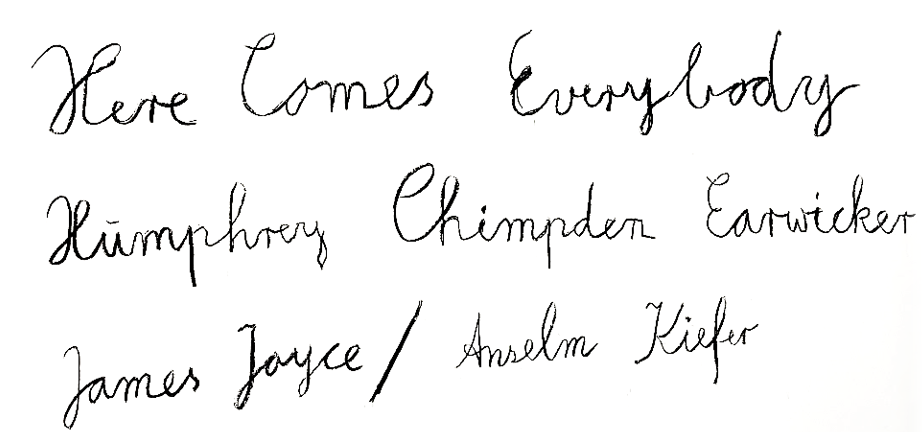
 The entrance

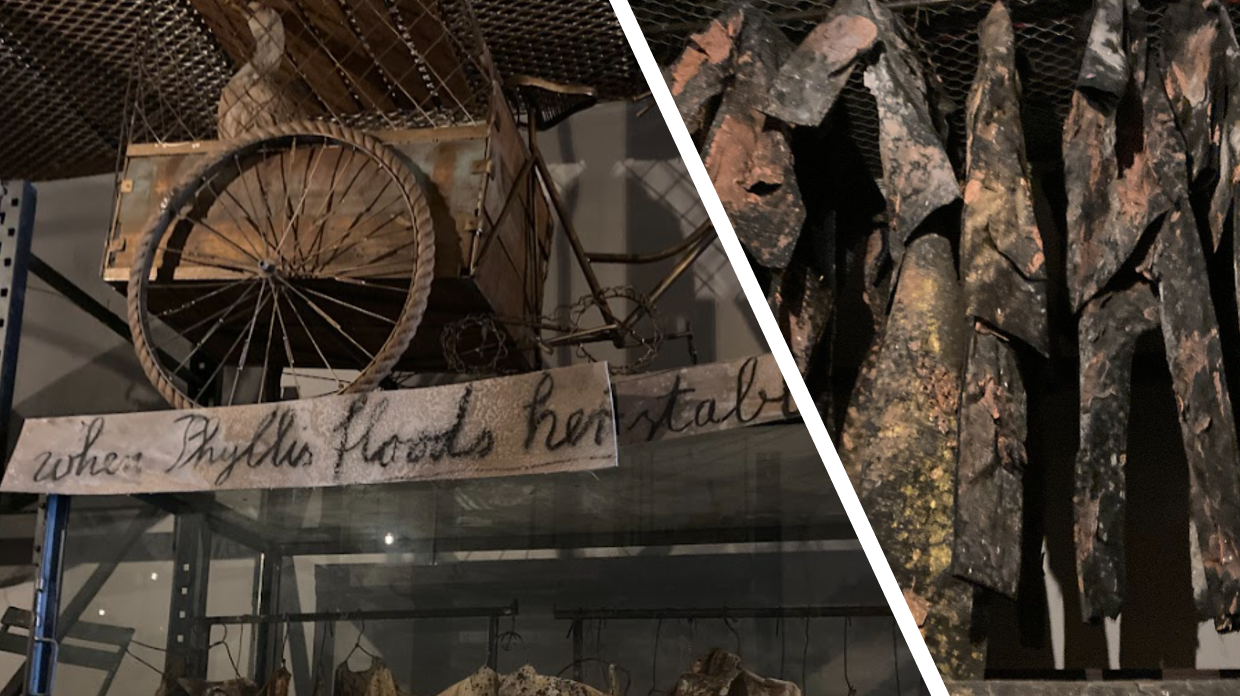

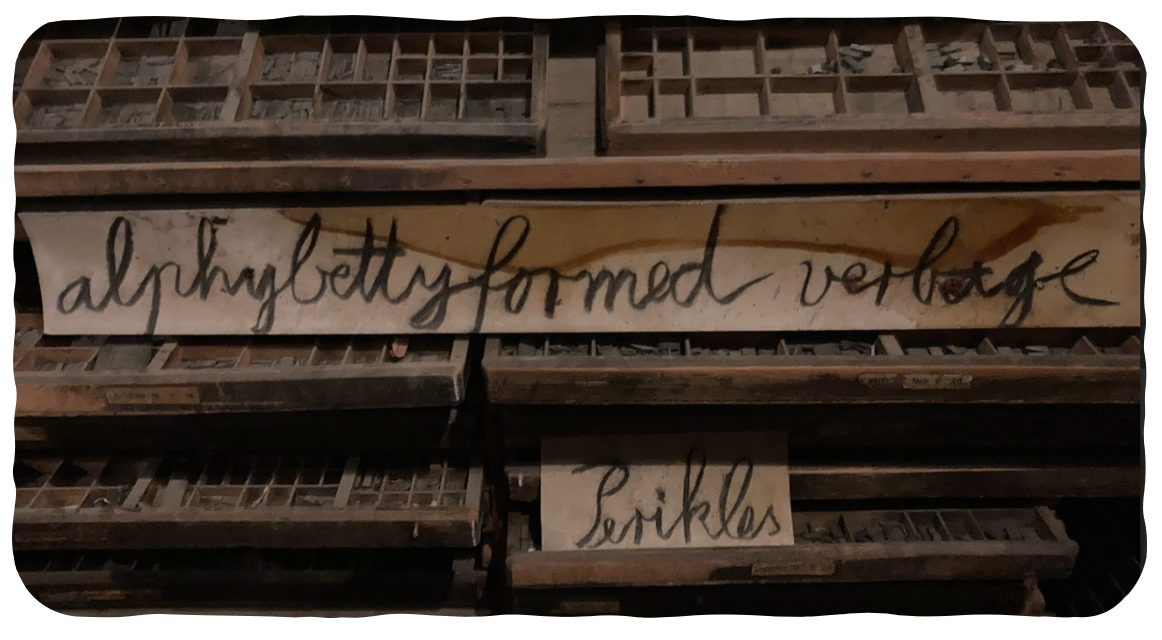

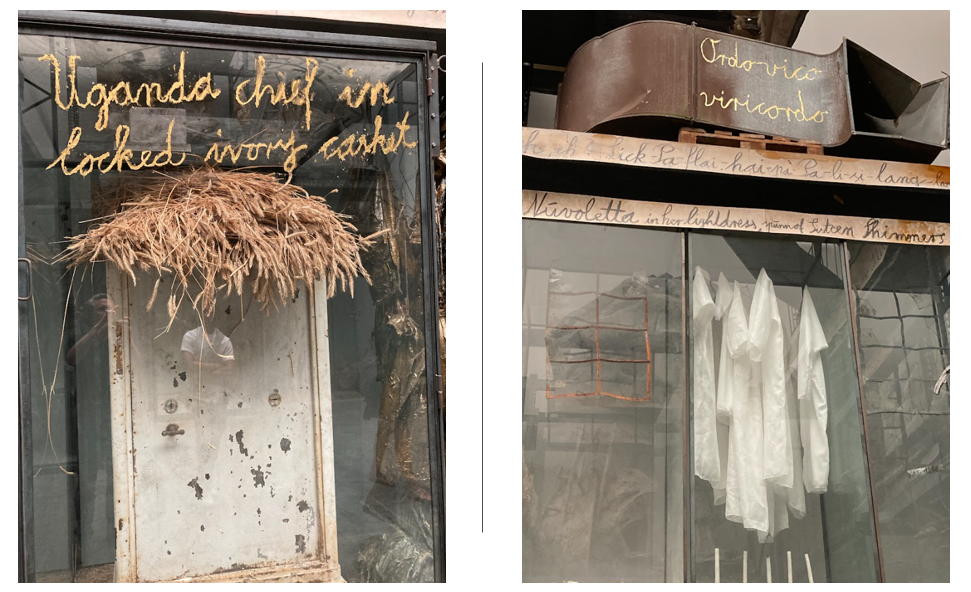

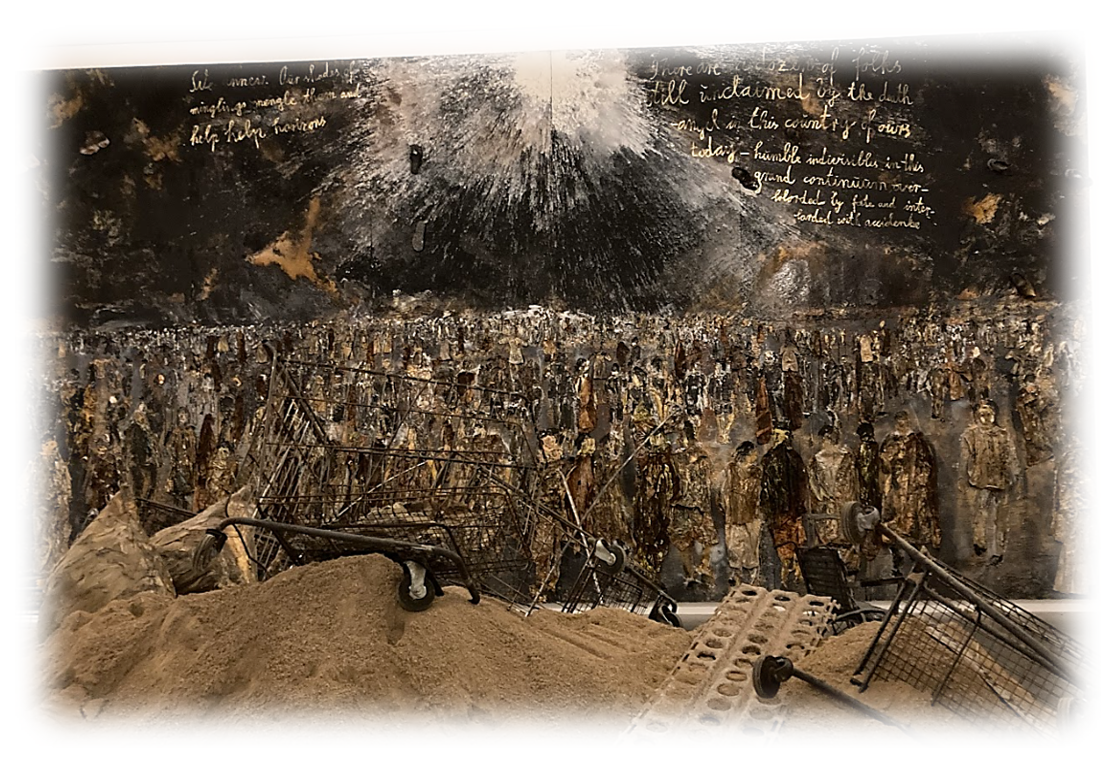


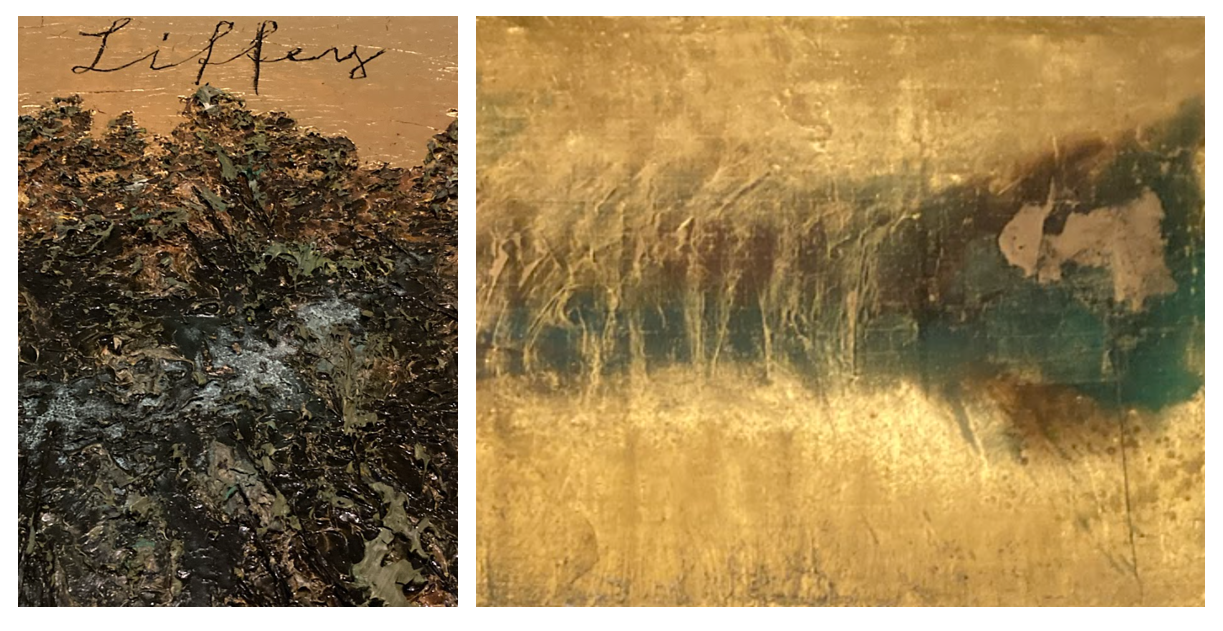

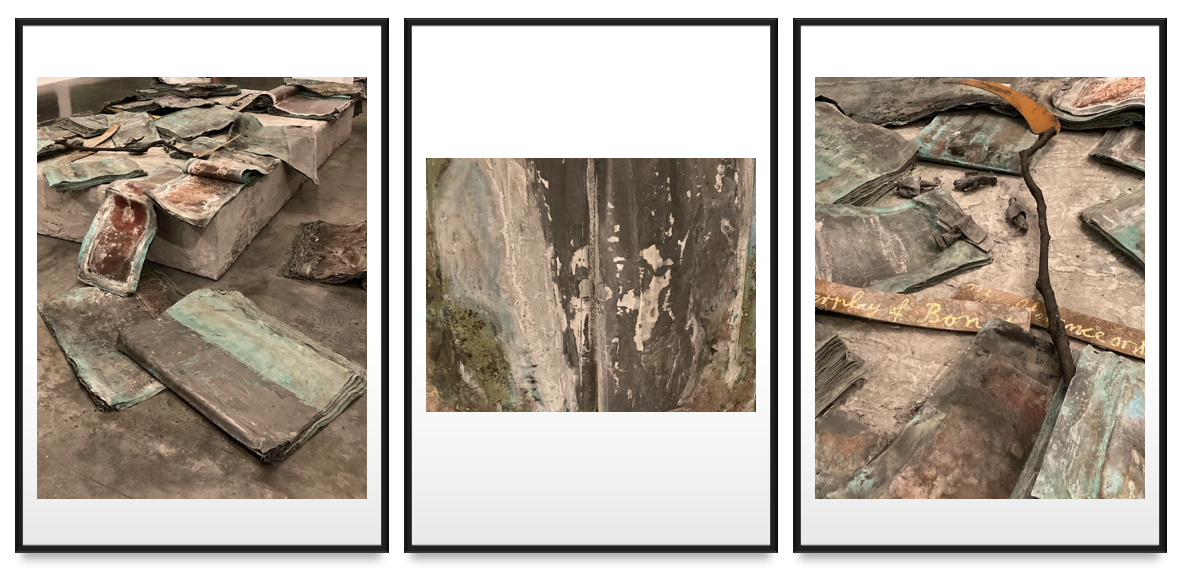
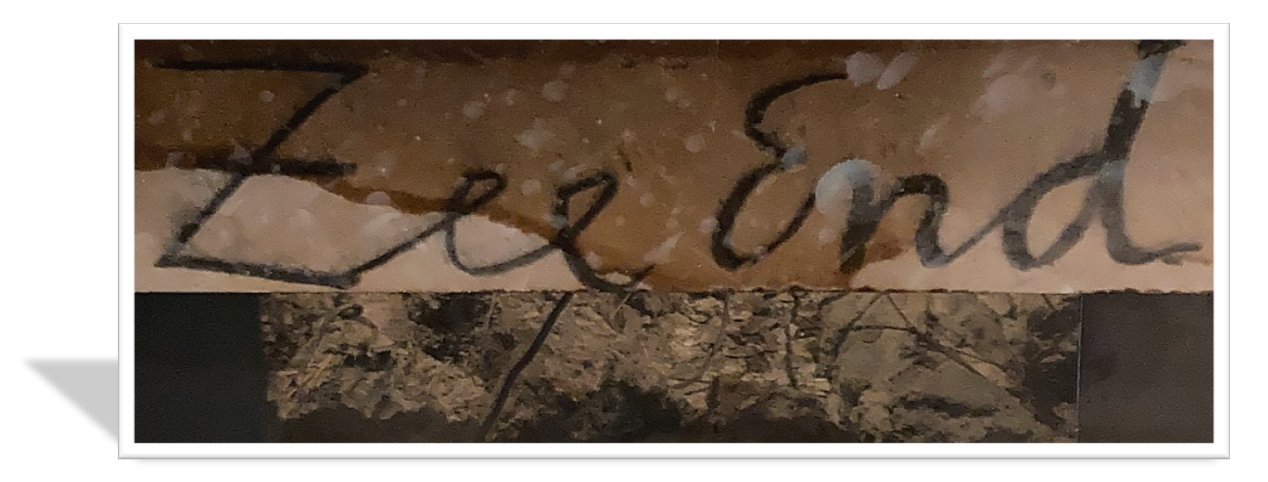
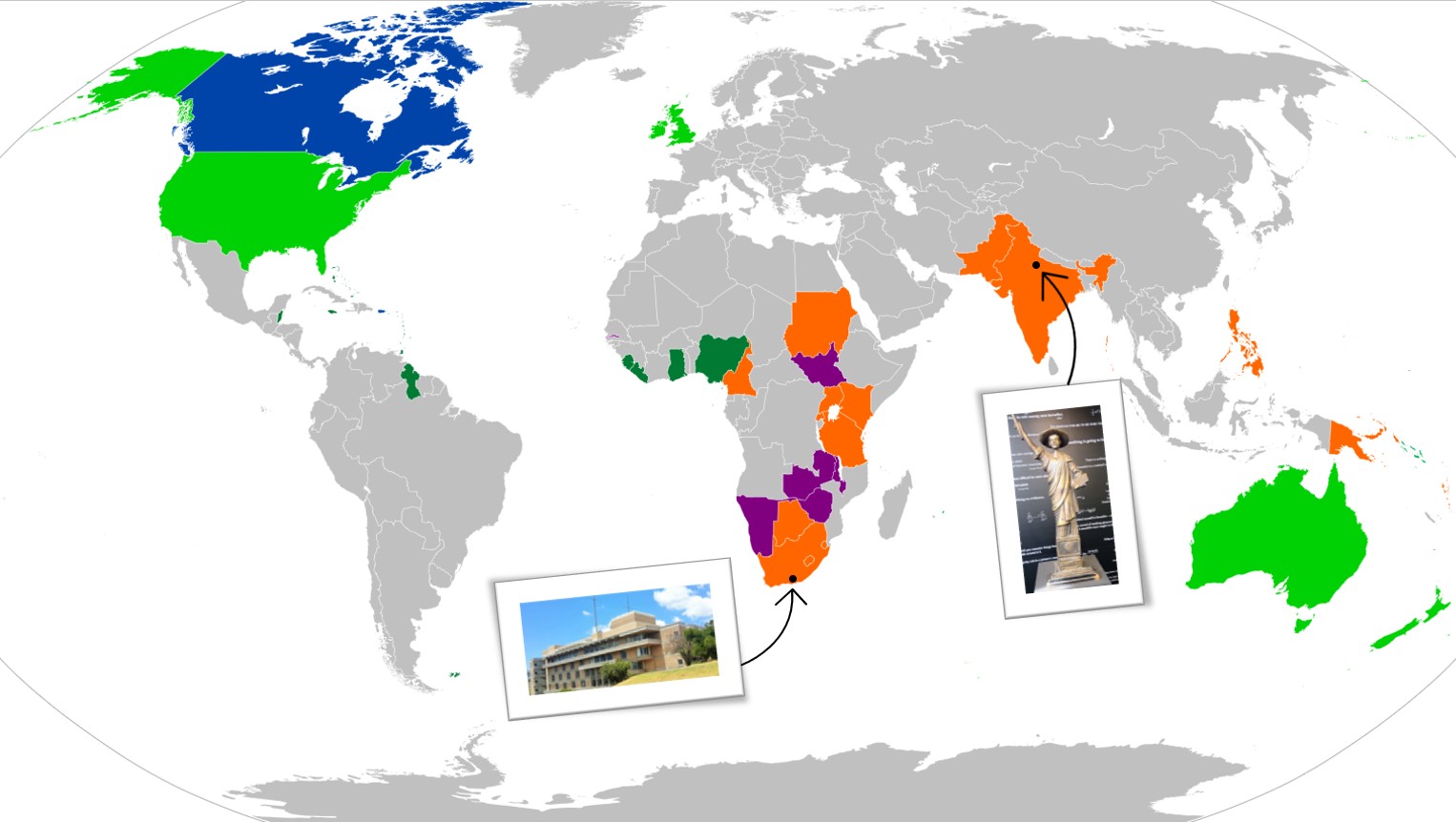


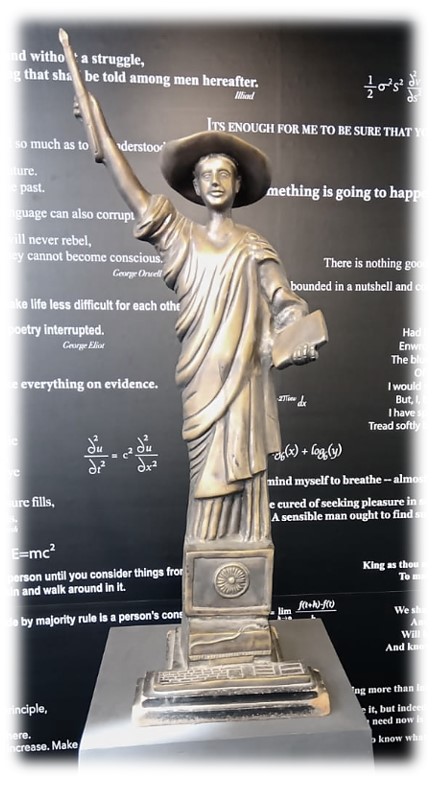

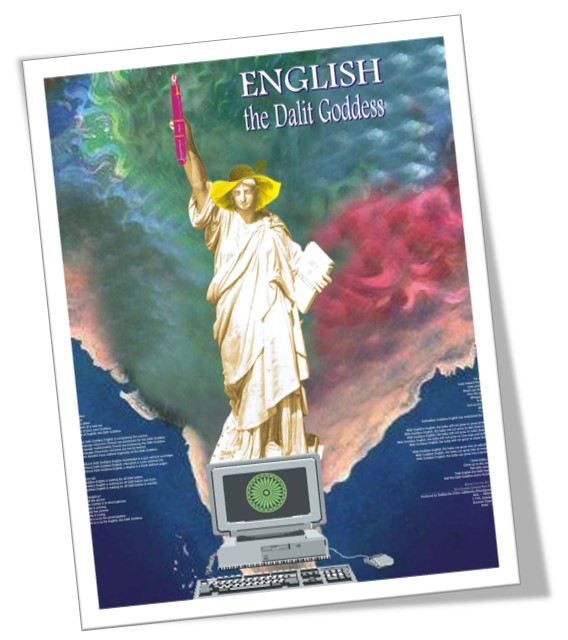
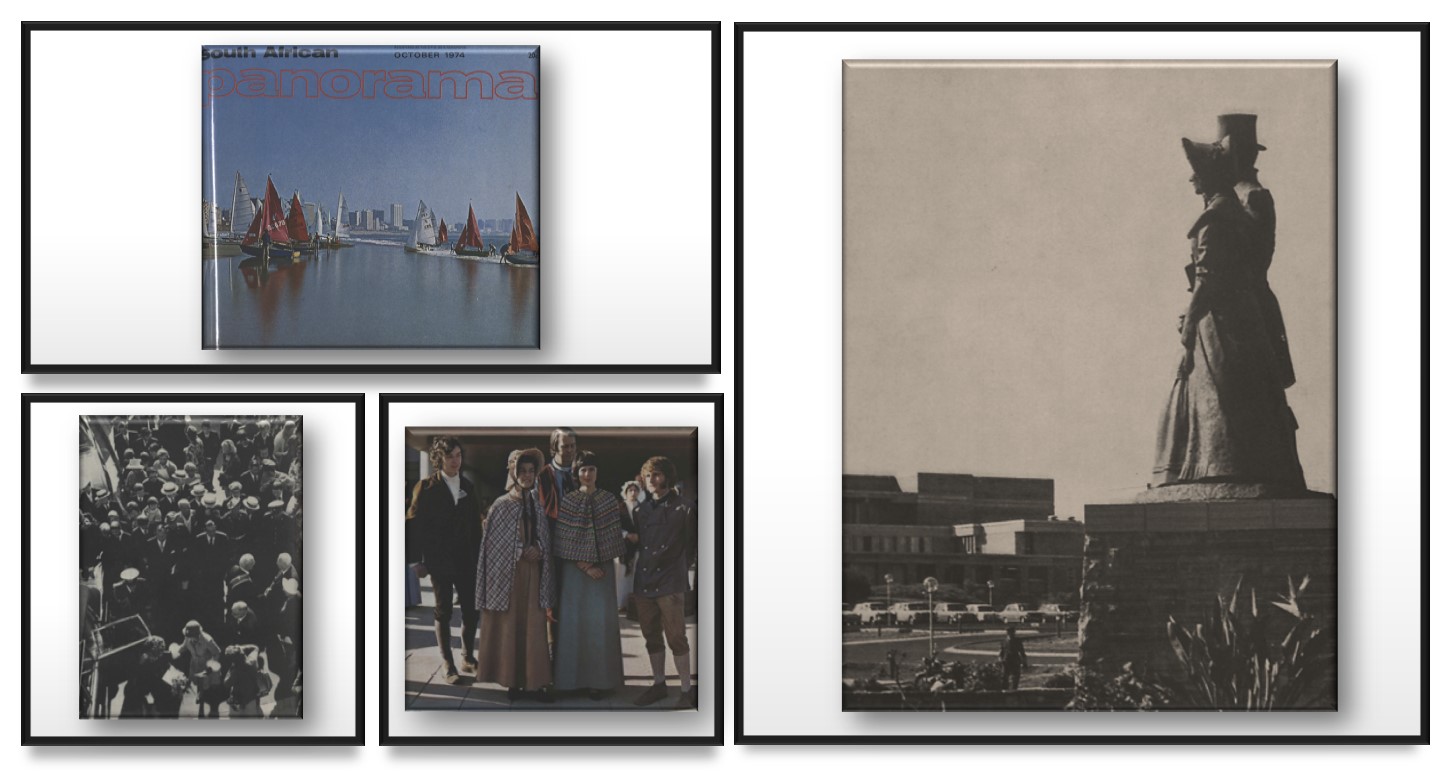

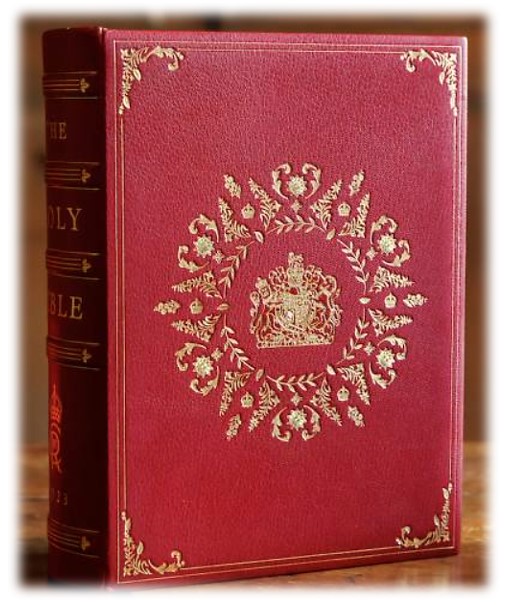




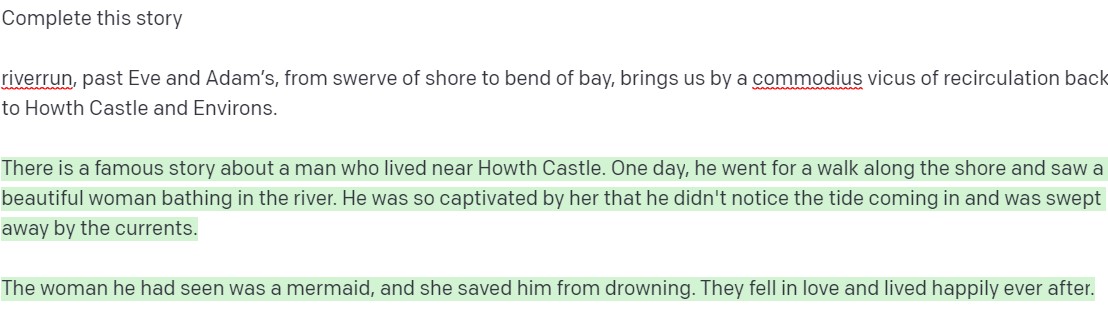



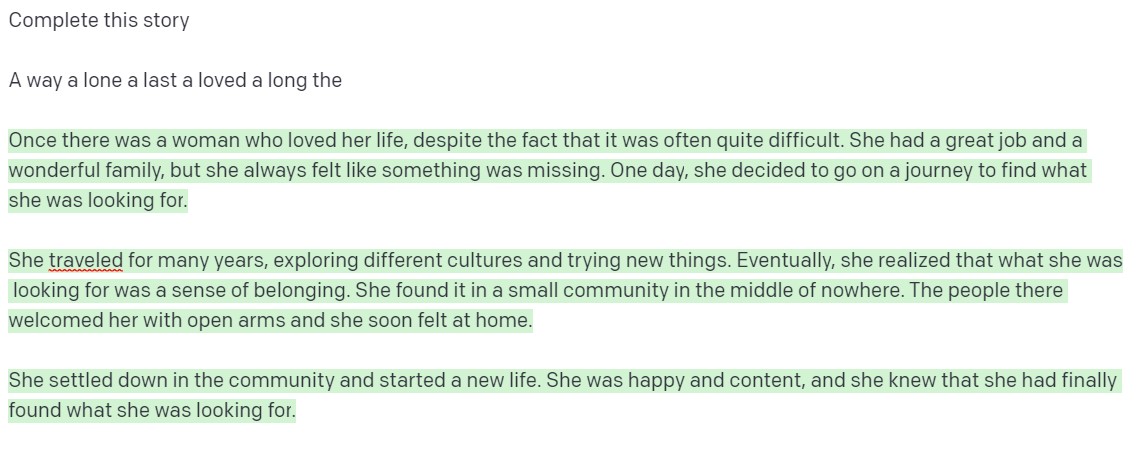

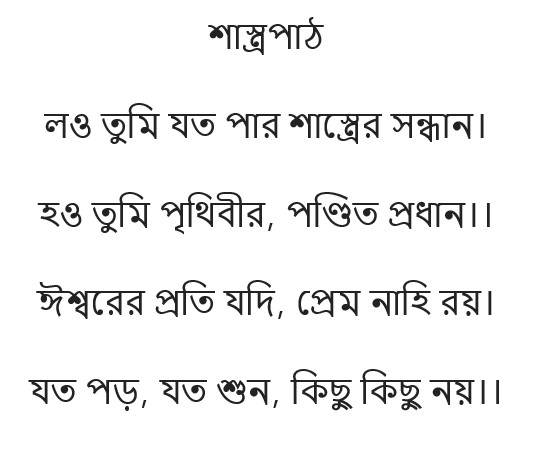


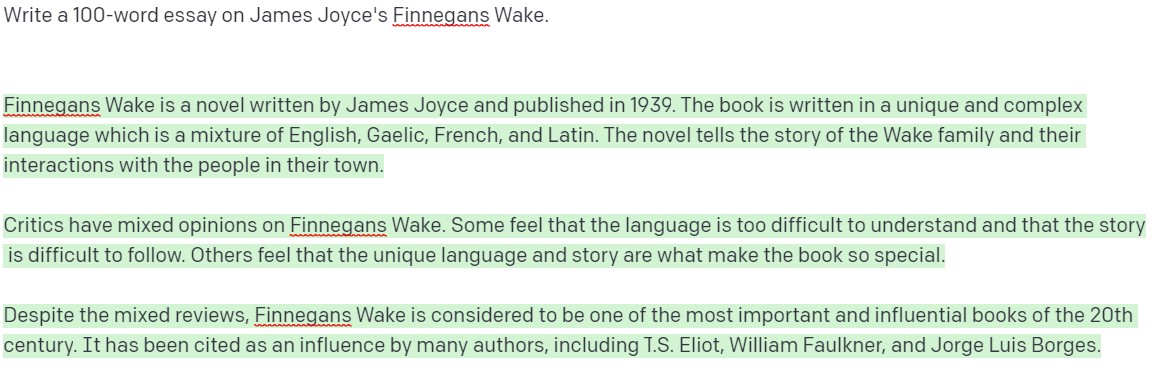
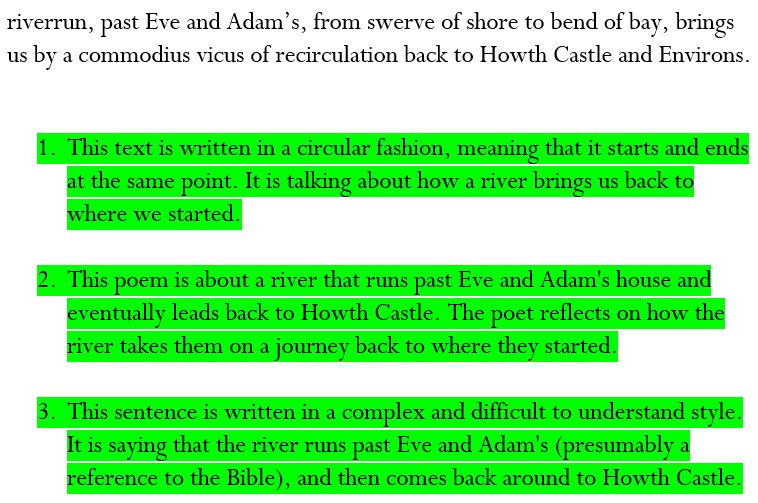



 Artefacts of Writing