

What happens when songs or lyric poems, composed at particular moments, become state anthems, performed again and again across generations? This essay addresses this question through the extraordinary figure of Rabindranath Tagore, who, despite his radically anti-statist vision of community, composed songs that became the celebrated national anthems of India and Bangladesh.
This is the abstract for an essay entitled ‘Rabindranath Tagore’s সমাজ/Samaj/Communities of Song,‘ published in Rethinking Lyric Communities, ed. by Irene Fantappiè, Francesco Giusti, and Laura Scuriatti, Cultural Inquiry, 30 (Berlin: ICI Berlin Press, 2024). The essay discusses three Tagore songs: ‘Jana Gana Mana,’ the national anthem of India; ‘Amar Sonar Bangla,’ the national anthem of Bangladesh; and poem 106 from the original Bangla version of Gitanjali (1910) in Ketaki Kushari Dyson’s 2010 translation. For a YouTube discussion of this article organized by the Gitika Trust in Kolkata, see here.
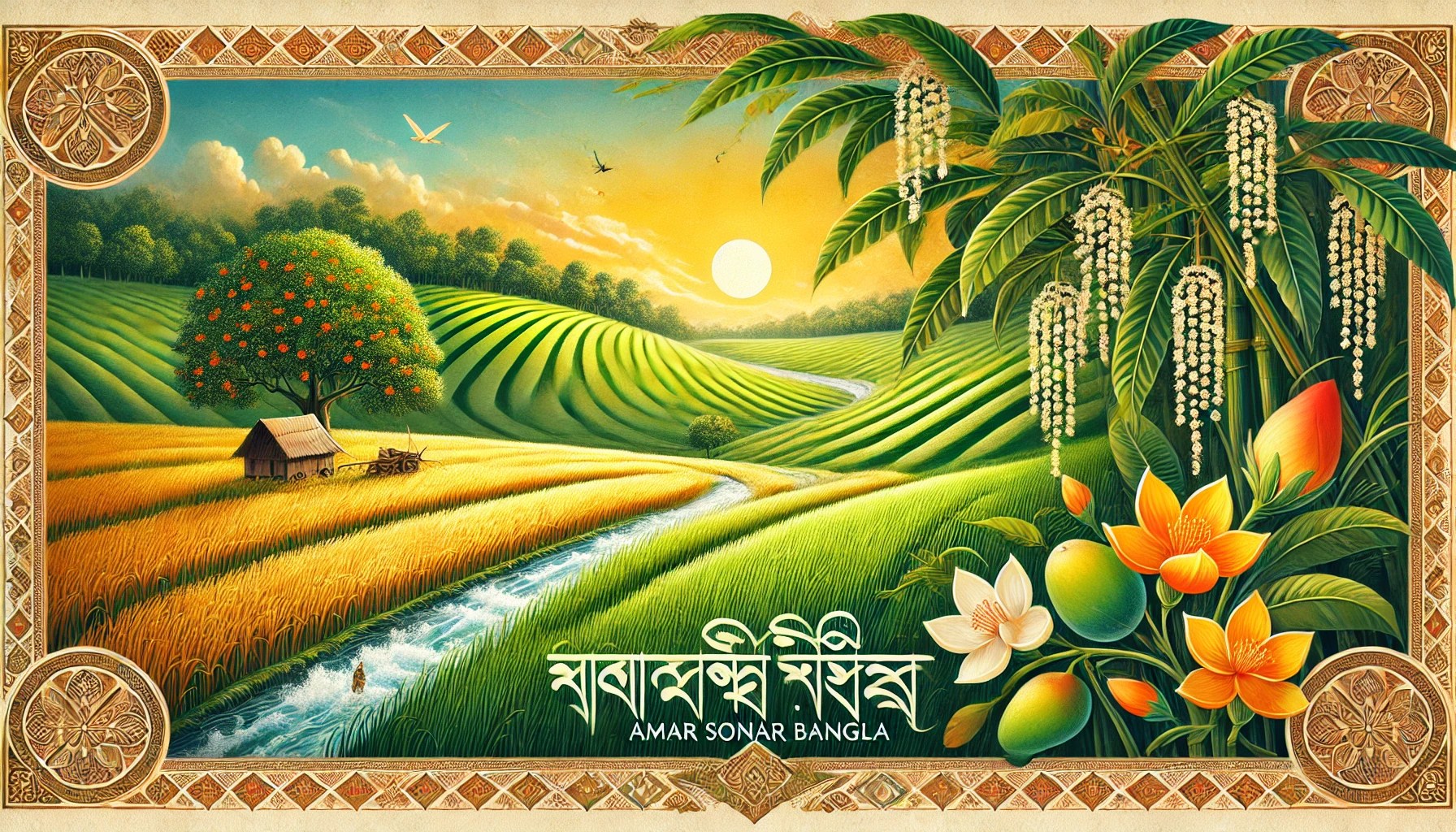
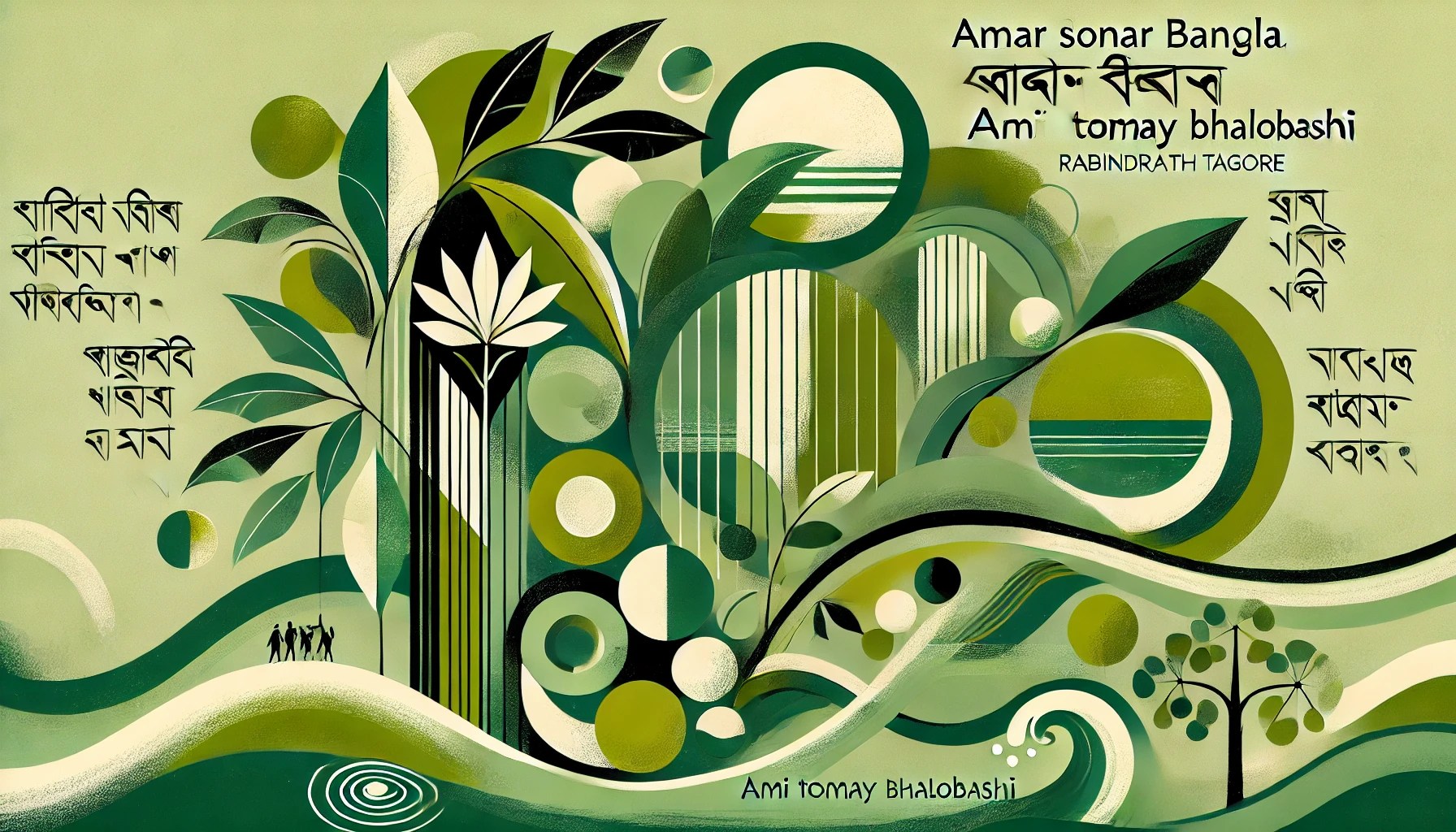
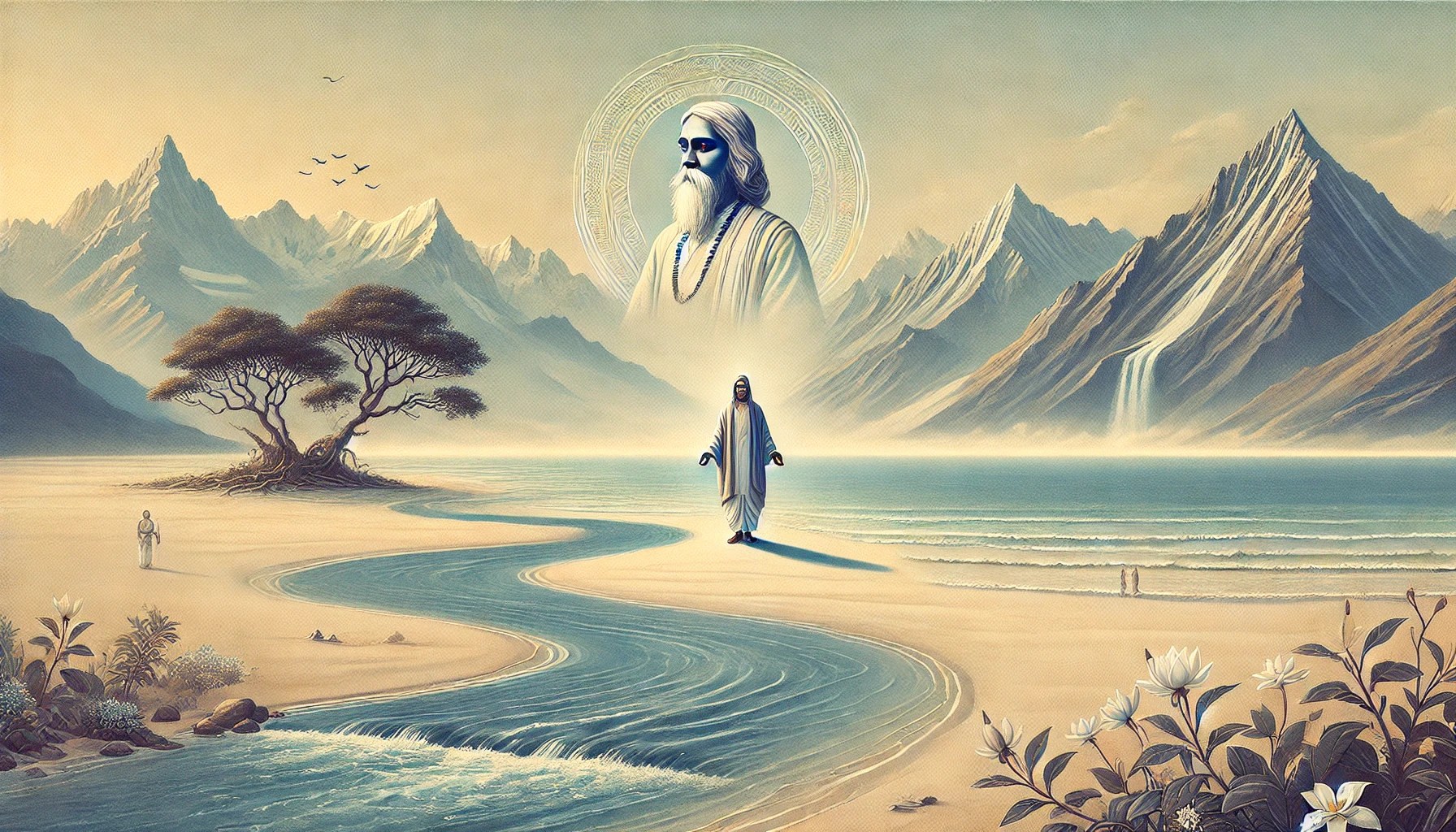
In what follows DALL-E, Open AI’s large text-to-image model, has a go at illustrating all three songs, focusing on the parts cited in the essay. The first attempt in each case responds to the simple prompt ‘Illustrate this,’ then, for the second attempt, ‘Redo this in the modernist style of Tagore’s own paintings.’ The final image, which links to the conclusion of the essay, shows Joyce and Tagore imagining ‘ourth’ as a place of ‘Europasianised Afferyanks’.




 Artefacts of Writing