


The Double Life of Books: Making and Re-Making the Reader (2024) is now available in paperback at a 30% discount (code: PAPER30). The following extract is from the preface.
**********
Preface: Two Voices
In 2008 I was asked to be part of a closing panel for the annual conference of the Society for the History of Authorship, Reading & Publishing (SHARP), the leading scholarly body in the field now widely known as ‘book history’. As the panel was intended to mark fifty years since the publication of Lucien Febvre  and Henri-Jean Martin’s field-defining L’Apparition du livre (1958), the contributors were asked ‘to consider how the scholarly interest in print culture or the history of the book has developed since then’ and ‘to identify an individual, a group, a publication, a theme or an event from the past fifty years that has most significantly shaped your own work’ (Sharp 2008: 29). Two of my co-panellists chose key figures in the fields of bibliography and textual criticism, Harold Love and W. W. Greg; one focussed on the concept of ‘Material Culture’; and another on a 1985 conference on the history of the book in Renaissance Europe held in Tours, France. I opted for the French writer-philosopher Maurice Blanchot (1907-2003). This is the text of my statement, which appeared alongside the four others on the conference programme:


Revisiting this statement over a decade later, my only major reservation concerns the passing remark about my first encounter with J. M. Coetzee’s Foe in 1986. There is no doubting the impact of that experience, given Foe’s preoccupation with authorship, writing, and the book trade. Yet many other books had as much, if not more, of an unsettling effect on me as a reader born just as the book, or what Marshall McLuhan called The Gutenberg Galaxy (1962), was losing its cultural centrality. As I began to reflect on the tenor of our discussions at the 2008 conference, however, it was not so much the arbitrariness of that choice that struck me. What concerned me more was the emphasis my statement and our wider discussions placed on the scholarly and theoretical questions Blanchot raised, relegating my experience as a so-called ‘ordinary reader’ to a background detail. Fair enough, perhaps, given the occasion and the brief, and yet for me it was impossible to quell the unease I began to feel about the gulf my statement and the conference exposed between the book understood as an object of academic study, on the one hand, and as an occasion of readerly experience, on the other.
The Double Life of Books confronts that gulf not so much to bridge it—there are no secure anchor points on either side—as to uncover the subterranean passages that have always belied the reality of the divide, connecting the two worlds of reading in idiosyncratic, sometimes secret ways. It does so by bringing two voices into play. The first belongs to the reader who delivered the Rosenbach lectures at the University of Pennsylvania in 2022 as an exercise in materialist autobibliobiography (chapters 1-3). The series was entitled ‘The Secret Life of Books.’ These chapters develop the experiential backstory alluded to in my reference to Coetzee’s Foe in the conference statement, tracing a line from Dr Seuss’s The Cat in the Hat (1957) to James Joyce’s Finnegans Wake (1939). In addition, as exercises in autobibliobiography, they address a central challenge for the history of reading: the difficulty of capturing the elusive process of what the leading book historian Robert Darnton called ‘inner appropriation’ (Darnton 1996: 85). This voice also permeates chapter 4, which extends the discussion of the experiential impact of the Wake taking issue with overly clear-cut distinctions between so-called ‘intrinsic’ and ‘extrinsic’ approaches to reading. The second voice emerges in the final section of the book, which shifts genre from autobibliobiography to academic essay. This is the voice of the professional scholar who wrote the essays comprising chapters 5-13. These originally appeared in academic journals and book collections across a range of disciplines, including book history, literature and law, and world literature. They now appear here in a revised form. By contrast, the first three chapters are largely unrevised, partly to retain the oral delivery of the lectures, partly to mark the difference in voice stylistically.

I focused on Blanchot for the SHARP conference because I was asked to identify an individual who had ‘most significantly shaped my own work’ as a professionalized academic with an interest in the history of media and reading. As I knew all along, however, what drew me to Blanchot in the first place was my own always evolving, never complete experience of one book in particular: Finnegans Wake. Joyce’s last and most eccentric foray into literary writing is, after all, one of the best examples of a work (anti-Book?) that, as Blanchot put it, refuses to align itself with established genres and categories, denying the modern institutions of the book any power to ‘impose its place and determine its form’. In its strategic incompleteness—the unstopped final sentence is ‘A way a lone a last a loved a long the’—it is also a paradigm of Blanchot’s unfinished and unfinishable ‘book to come’ (Joyce 1975: 628). Yet, as ever, it was not so much Blanchot who helped me come to terms with the Wake’s many eccentricities as the Wake that fuelled my interest in Blanchot’s anti-scholastic reflections on the question of ‘the book.’ Once again illustrating the generative capacity of books themselves, and subverting the scholastic order of things, the experiential preceded and then directed the theoretical, not the other way around.
How is this possible given the Wake’s well-earned reputation as an iconically unreadable (and unread) book? It turns out that Joyce’s last work is not just an extended 628-page puzzle designed to derail reading in its ordinary sense. It is also a compendium of reading lessons, addressed chiefly to the ‘abcedminded’—that is, readers trained in the Latinate writing system and existentially immersed primarily in the English language and at least one of its many cultures (Joyce: 18). Moreover, to guide these readers through its meandering labyrinths of letters, it includes a pantheon of exemplary bad male readers, each of whom serves as an object lesson in how not to read. Two proved especially important for this book: the ‘ornery josser’ and the ‘grave Brofèsor’ (Joyce: 109, 124). As their names indicate, they come from opposite ends of the cultural spectrum and they cut very different figures, but, as the rhyme hints, they share more than their gender.
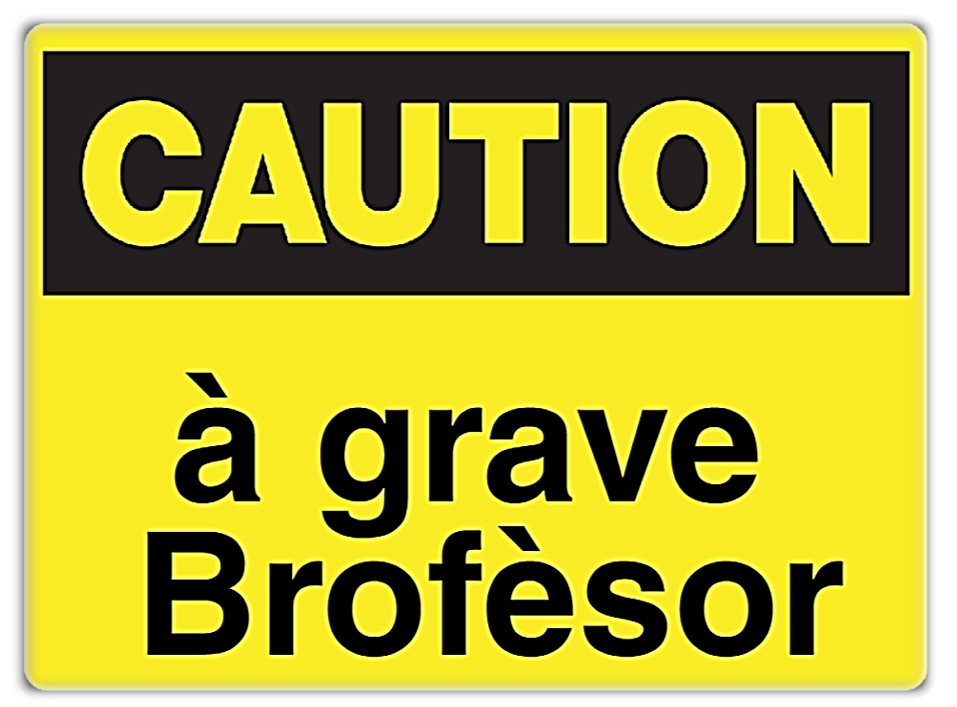
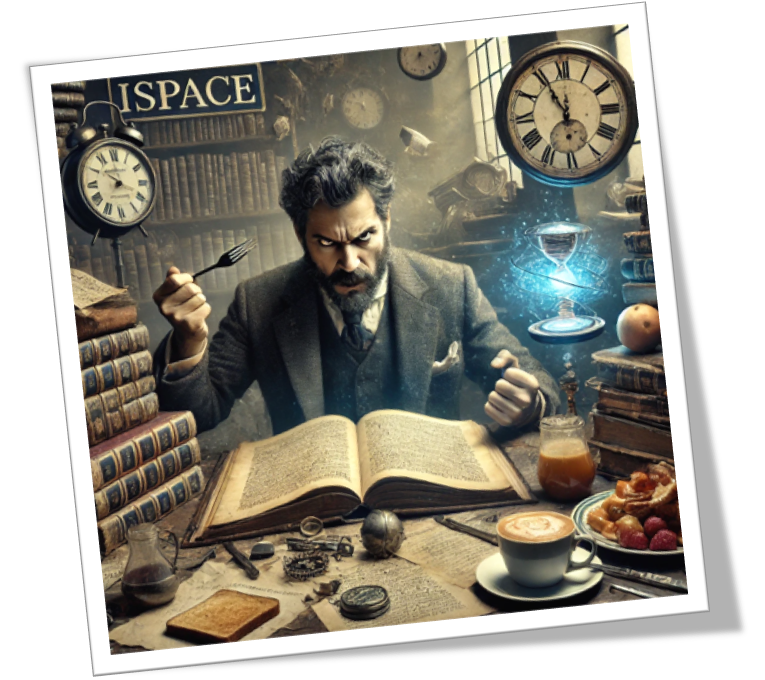
When it comes to the Brofèsor, Joyce’s endlessly interlingual, polysemic, and polyphonic play on the Latinate writing system allows professors (think English or Danish) simultaneously to be Brotessers (German), or bread-eaters, who in turn tend (at least in Joyce’s book) to be devotees of the Catholic Eucharist, seeing (and consuming) Communion bread as the transubstantiated body of Christ. Joyce also associated Brofèsors of this kind with Neoplatonists, who think the ‘everintermutuomergent’ world of appearances can be resolved into one ultimate Idea or reality, and with followers of Saint Paul, who believe the ‘letter killeth but the spirit giveth life’ (Joyce: 55; Carroll 1997: 224). By contrast, the Wake, which is a sustained humanistic affirmation of earthly life—‘ourth’ in all its bodily specificity, finitude, and imperfections—stands Paul, and all the traditions of interpretation he prefigured, whether legal, religious, philosophical or literary, on his head, insisting it is the singular, otherworldly spirit that killeth, and the endlessly generative letter that giveth life (Joyce: 18). So, for me, the Wake’s first injunction was deeply anti-scholastic: do everything you can to avoid becoming a ‘grave Brofèsor.’ This warning echoes throughout this book.

The ‘ornery josser’ is not as high-minded as the Brofèsor, but he too displays an unhealthy singlemindedness when it comes to reading ‘a quite everydaylooking stamped addressed envelope’ (Joyce: 109). Why? Because he focuses obsessively on the letter it contains, its contents, or, even more narrowly, its supposed meaning, ignoring not only the envelope itself but ‘the enveloping facts themselves circumstantiating it’ (109, see also ‘What is creative criticism?‘). At one level, the josser is the bad reader who has always haunted book and media history: the literary critic, say, who attends exclusively to the ‘words on the page’ whether digital or print, or the intellectual historian who is interested only in books as vessels for the ideas they supposedly contain. As I show in chapter 8, the fictive josser found a real-life avatar in the figure of Elton John during one of his many libel cases. At another level, however, the josser serves as further warning to any institutionalized agent of the book whether located in the university, the publishing industry, or elsewhere. These intermediaries are the envelope-makers who, following Joyce’s analogy, package and address the author’s letter for readers, a process, which, in the case of the Brofèsors, also brings various methods or circumstantiating disciplines and sub-disciplines into play. All these intersecting envelopes demand the forms of attention the josser avoids, but, to pursue the logic of Joyce’s analogy and Blanchot’s anti-scholasticism, they can never be determinative or definitive, since letters can always be readdressed and put in new envelopes. This conviction also runs through this book, emerging most explicitly in the concluding section called ‘Reading Envelopes’ (chapters 10-13).
The Double Life of Books
By making the ‘ornery josser’ and the ‘grave Brofèsor’ a rhyming pair, non-identical twins with more in common than they would like to believe, Joyce invites us to be cautious about distinguishing too sharply between what the academic literary critic John Guillory calls ‘lay’ and ‘professional’ readers (Guillory, 2022: 320). As Guillory notes, this binary shaped, indeed, deformed literary criticism from its very beginnings as an academic discipline. When it ‘crystallized in its present form in the twentieth century, its professionalized reading practice was defined precisely by a deliberate cultivation of a difference from lay reading and even by the expression of antagonism toward that mode of reading’ (327). By contrast, the ‘lay’ reader has been an important object of study for book historians ranging from Roger Chartier to Leah Price (323-24). To overcome the ‘spectacular failure’ of their own discipline, professionalized, university-based literary critics could do well, Guillory argues, not just to learn from book historians but to recognize ‘the continuity between lay and professional reading’ (342). Yet with regret—‘alas’ he laments—he has ‘no program for reconciling these practices’ (342). The Double Life of Books does not pretend to fill the gap. Rather, taking its cue from Joyce, it addresses some of the less promising continuities between ‘lay’ and ‘professional’ reading, while bringing other, potentially more productive connections into view. By blending two voices and crossing two genres of writing, it offers not a ‘program’ for reconciling the ‘professional’ and the ‘lay’ but a way of keeping the professorial and the experiential in dialogue, opening lines of communication between the book as disciplinary or inter-disciplinary object of study and the book as extra-disciplinary occasion of readerly experience—hence The Double Life.
Making and Re-Making the Reader
So much for the title. What about the subtitle? At the publisher’s request, I toyed with Making and Re-Making a Reader. That appealed because it gives due prominence to my autobibliobiographical self and links the lectures to some of my own sources of inspiration, notably the broadly feminist tradition of biblio-memoir-criticism illustrated by Azar Nafisi’s Reading ‘Lolita’ in Tehran (2003), Rebecca Mead’s My Life in Middlemarch (2014), Kirsty Gunn’s My Katherine Mansfield Project (2016), and Jane Tompkins’s Reading through the Night (2018). The closest I come to this is chapter 4, titled ‘My Finnegans Wake’. Lauren Fournier reflects on the wider contexts and consequences of this tradition in Autotheory as Feminist Practice in Art, Writing, and Criticism (2021). Other points of reference were the music critic Carl Wilson’s different, but no less self-reflexive, book about Celine Dion Let’s Talk about Love: A Journey to the end of Taste (2007), and the writer-musician Amit Chaudhuri’s essay collection The Origins of Dislike (2018). In the end, however, I decided the indefinite article downplayed the double-voicedness of my own project and risked being too restrictive. Whereas, despite the counter-intuitive grammar, Making and Re-Making the Reader allows for the many ways and guises in which the figure of the reader emerges across this volume: as biographical individual (chapters 1-4 and 8), as hypothetical construct (chapter 9), as market (chapters 7 and 12), as legal fiction (chapter 8), and as guiding but always debatable concept (passim).


 Artefacts of Writing